Modern dining tables: the latest trends
Discover on-trend dining tables

Round and oval dining tables: the charm of soft shapes
One of the most prominent trends in contemporary living is the return to organic, enveloping geometries. After years dominated by minimalist rigor and sharp right angles, interior design is rediscovering the sensuality of curved silhouettes that soften room architecture and instantly cultivate a more intimate atmosphere.
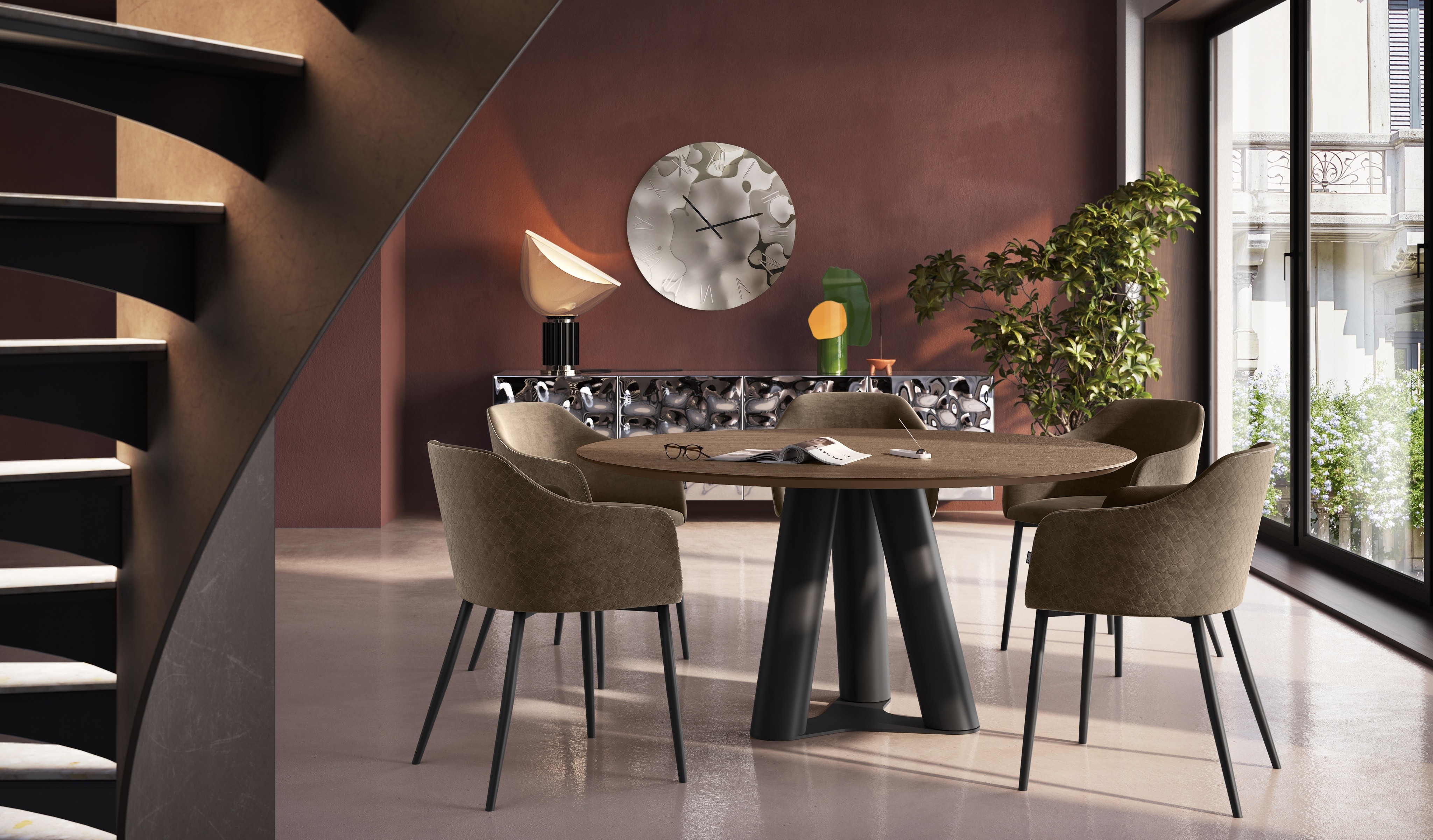
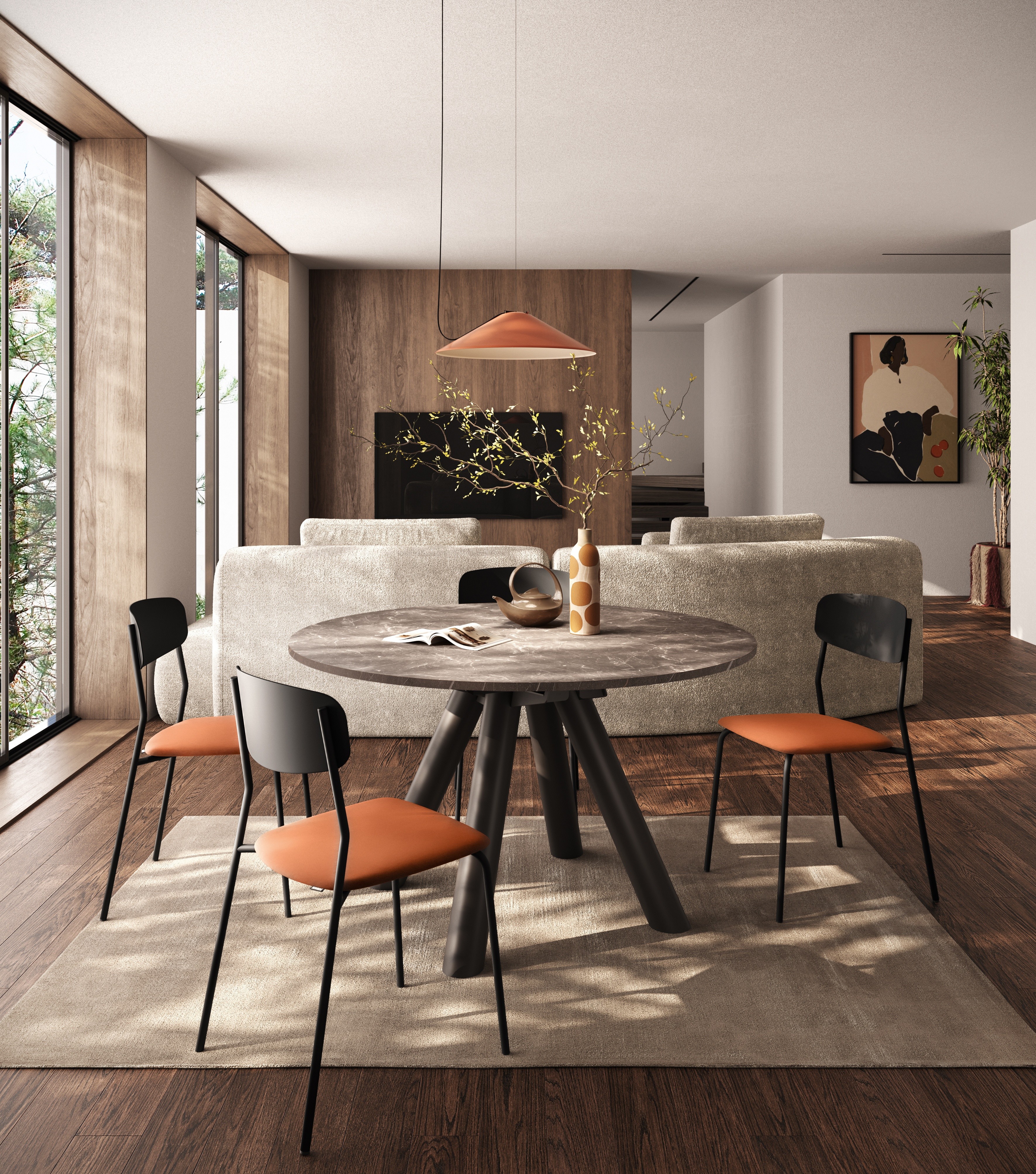
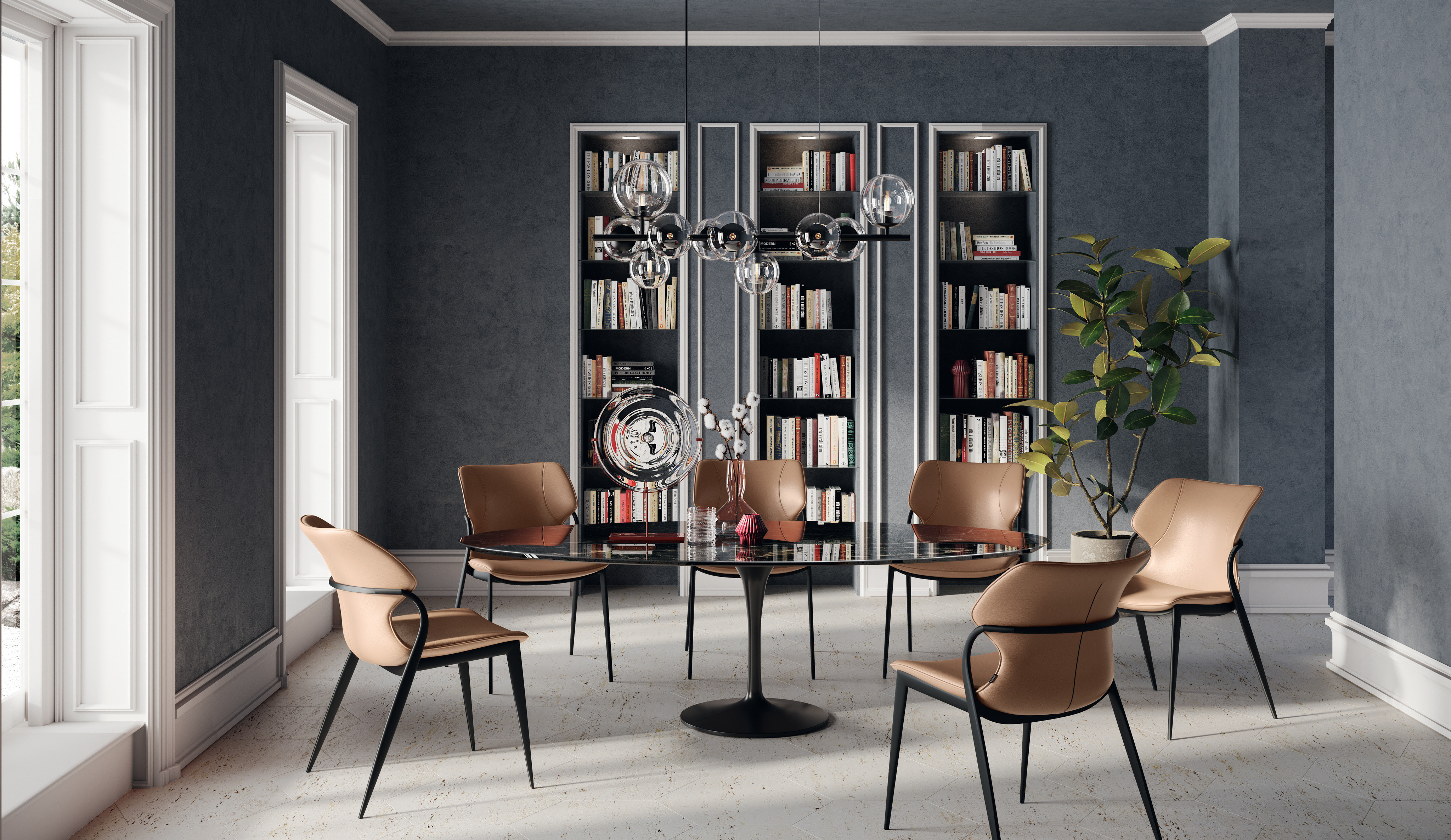
Selecting a round or oval dining table, such as Style, fosters effortless conversation and removes hierarchy among guests, as everyone can easily engage eye-to-eye. From an aesthetic perspective, the rounded silhouette creates a harmonious focal point that breaks up the linearity of kitchen compositions or equipped walls, while also optimizing traffic flow when proportioned correctly.
This movement is expressed through three core elements:
- Round and oval tops: they encourage interaction and eliminate sharp corners (a welcome safety feature in homes with children);
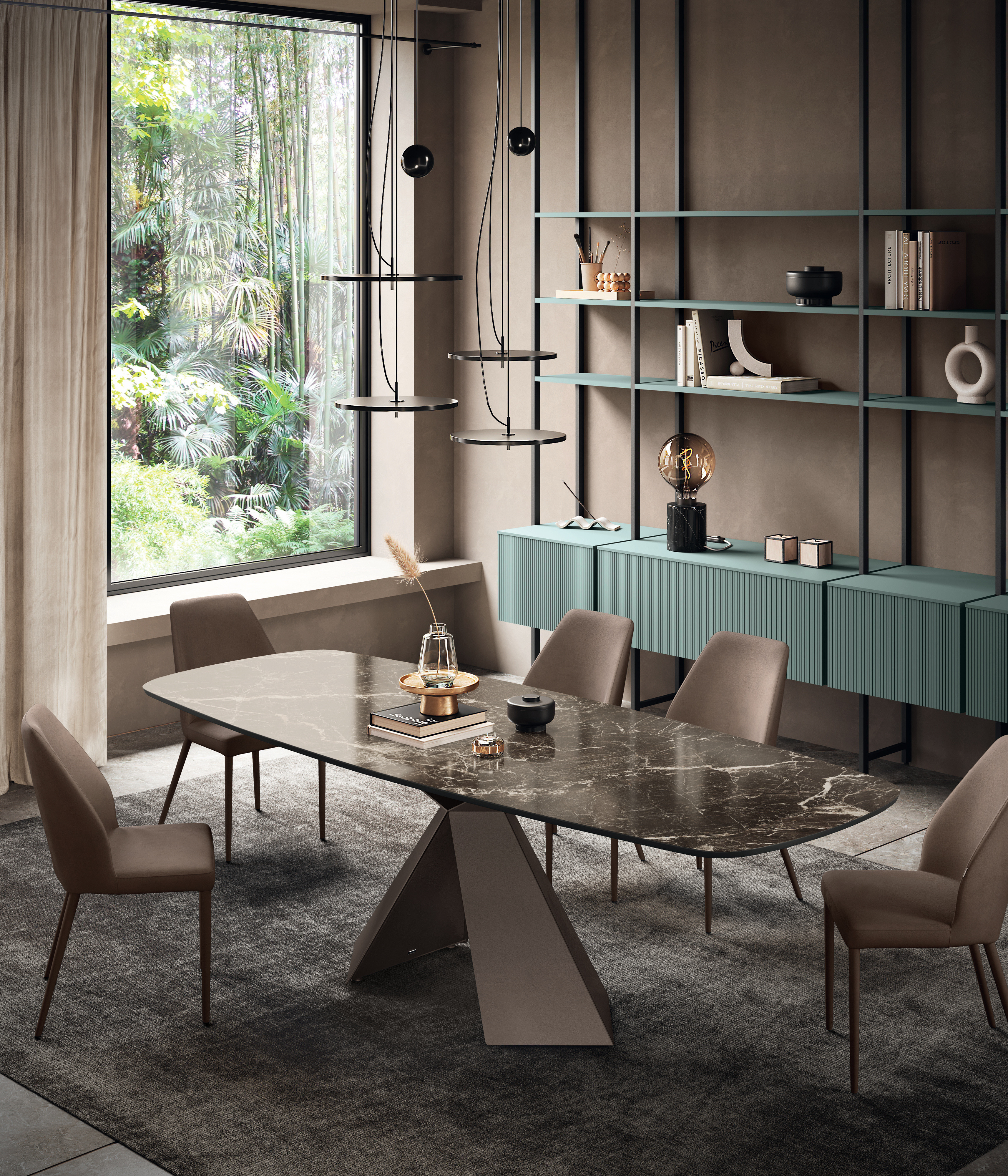
- Rounded edging and corners: even in latest-generation rectangular models, sharp edges yield to softly chamfered profiles (as demonstrated by the Metropolis table);
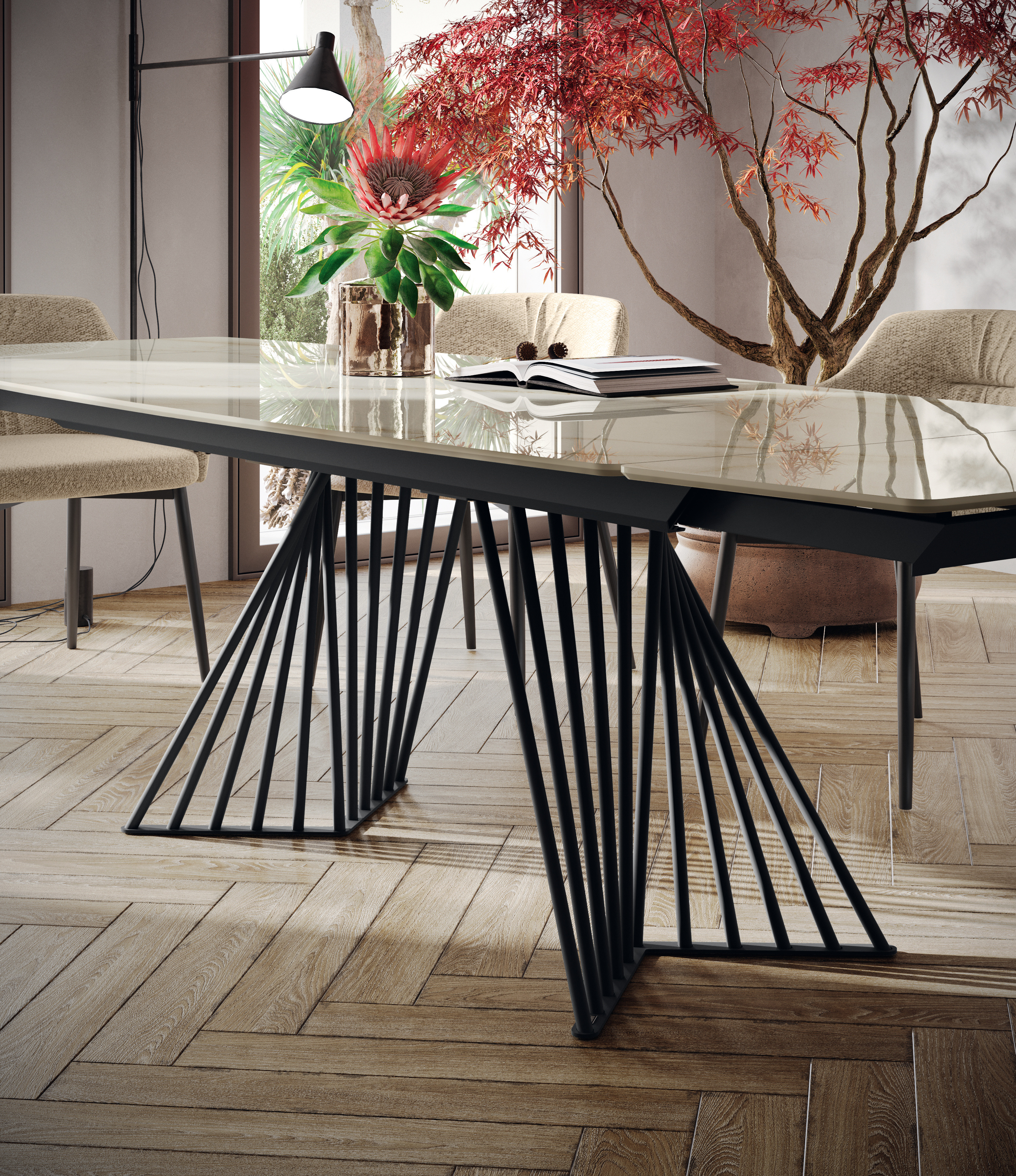
- Sculptural frames: central frames, slanted or intertwined legs and curved volumes turn the structural support into a genuine sculpture, while freeing up valuable legroom for guests.
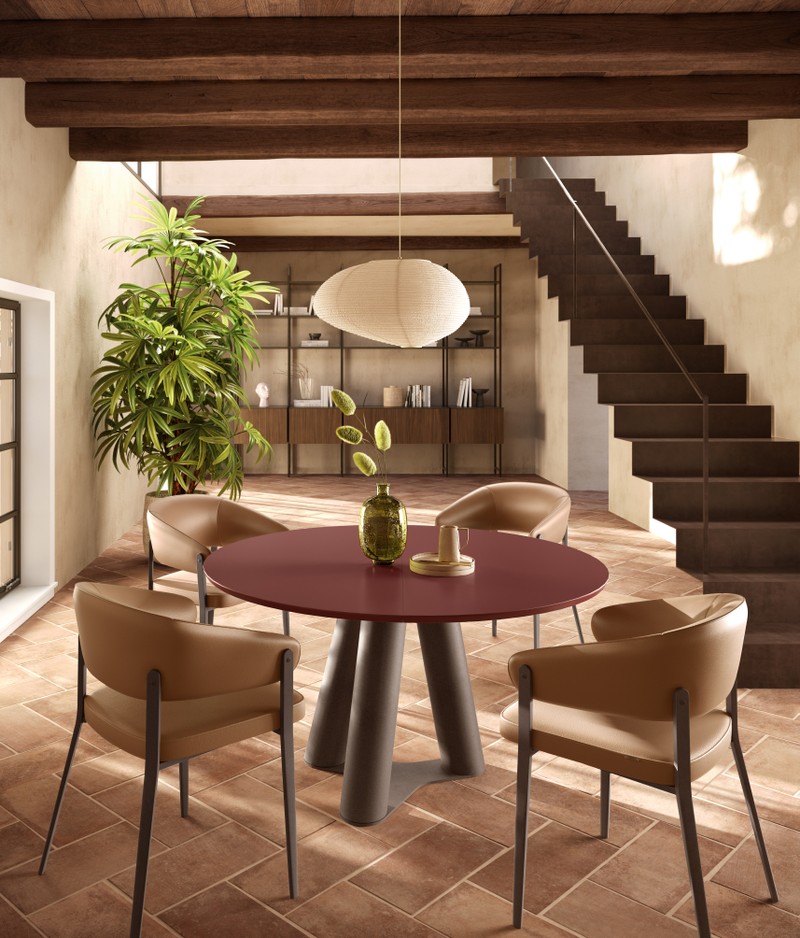

A designer’s tip: to elevate a dining table with sinuous silhouettes, pair it with padded chairs boasting an enveloping backrest or curved profiles that mirror the design. Overhead, a suspension lamp is essential, visually anchoring the dining area even within a spacious living room. If you are deciding which shape best complements your home, explore our guide comparing round, square and oval tables.
Wood, marble and glass: the hero materials of modern tables
The choice of material defines the soul of a modern dining table, establishing not only its aesthetic impact but also its color dialogue with kitchen and living room furniture, as well as its daily care requirements. Current trends celebrate the charm of natural materials like wood and marble, balanced by the visual lightness of glass.
Wooden dining tables: natural appeal and warmth
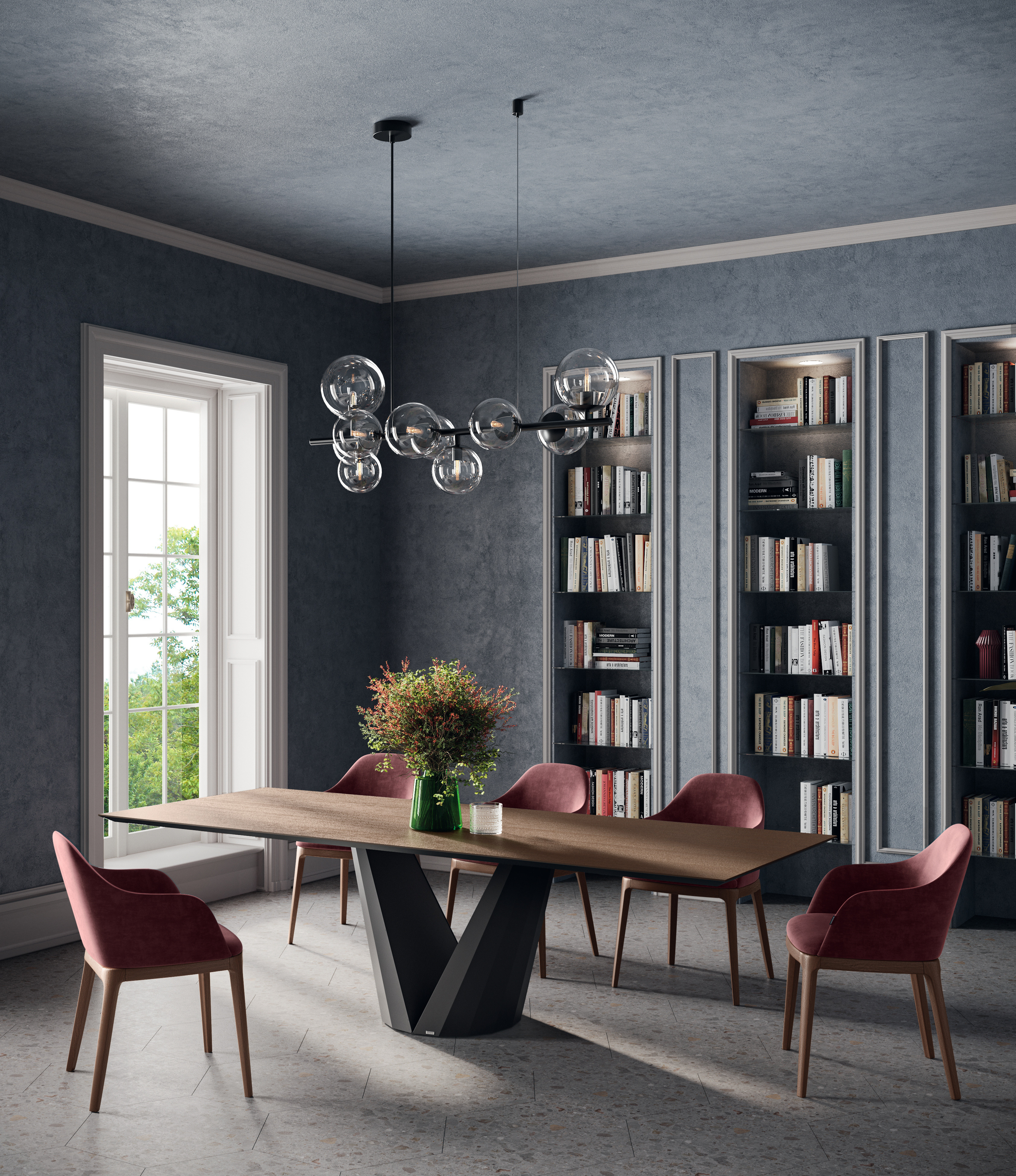
The wood (or wood-effect) dining table remains an enduring design icon. The finishes highlight the textured richness of natural wood finishes, bringing grain patterns, knots, and subtle organic tonal variations to the fore. To preserve its beauty over time, care for the surface using specialized cleaning products and avoid direct exposure to extreme heat sources.
Marble tables: elegance and character
For those seeking a dramatic centerpiece, marble represents the pinnacle of sophistication. The distinctive veining of each slab ensures every table is a unique creation, designed to harmonize effortlessly with metallic details, velvet or leather seating and bespoke kitchen design. While natural marble requires attentive care to guard against acidic substances and staining, advanced technical stone surfaces, such as porcelain stoneware, deliver the same elevated aesthetics with superior durability for daily use.
Glass tables: lightness and luminosity
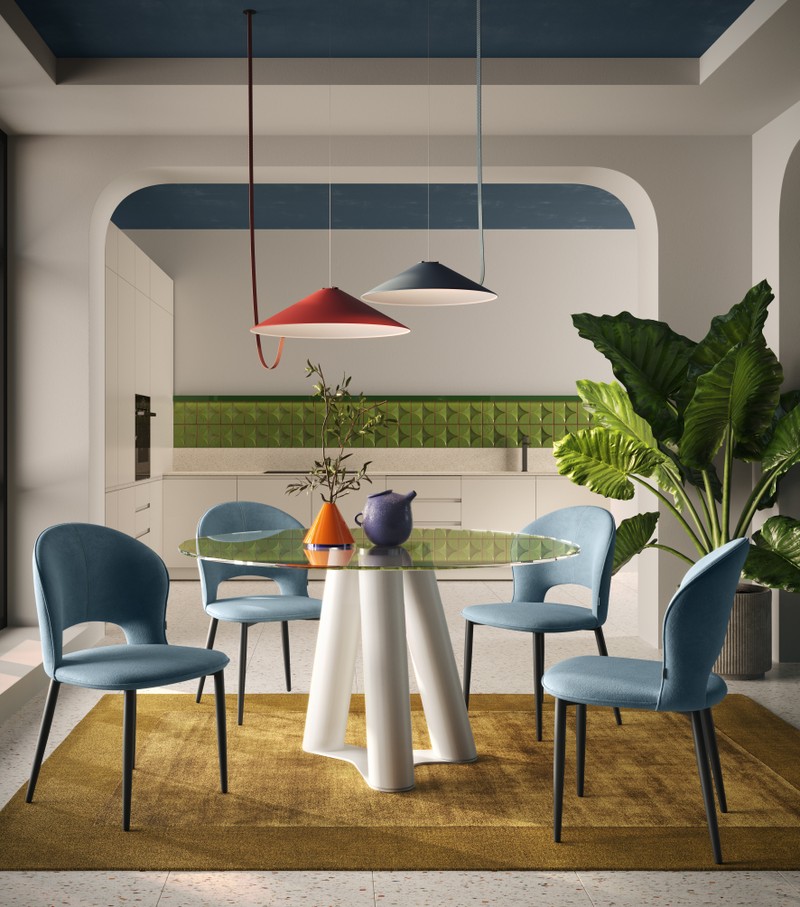
Complementing the textured presence of wood and marble, the glass dining table stands out as a compelling solution for spaces demanding luminosity and airiness. The transparency of glass (tempered, smoked or bronze) allows natural light to filter through the room, making it an ideal choice for compact kitchen layouts. Furthermore, glass fully displays the frame below, showcasing sculptural frames.
Extensible dining tables: where design meets versatility
In today’s dynamic, multifunctional residences, flexibility is a paramount requirement. Extensible kitchen tables fulfill this need flawlessly, maintaining a compact footprint during daily routines while effortlessly accommodating additional guests during dinner parties and special celebrations.
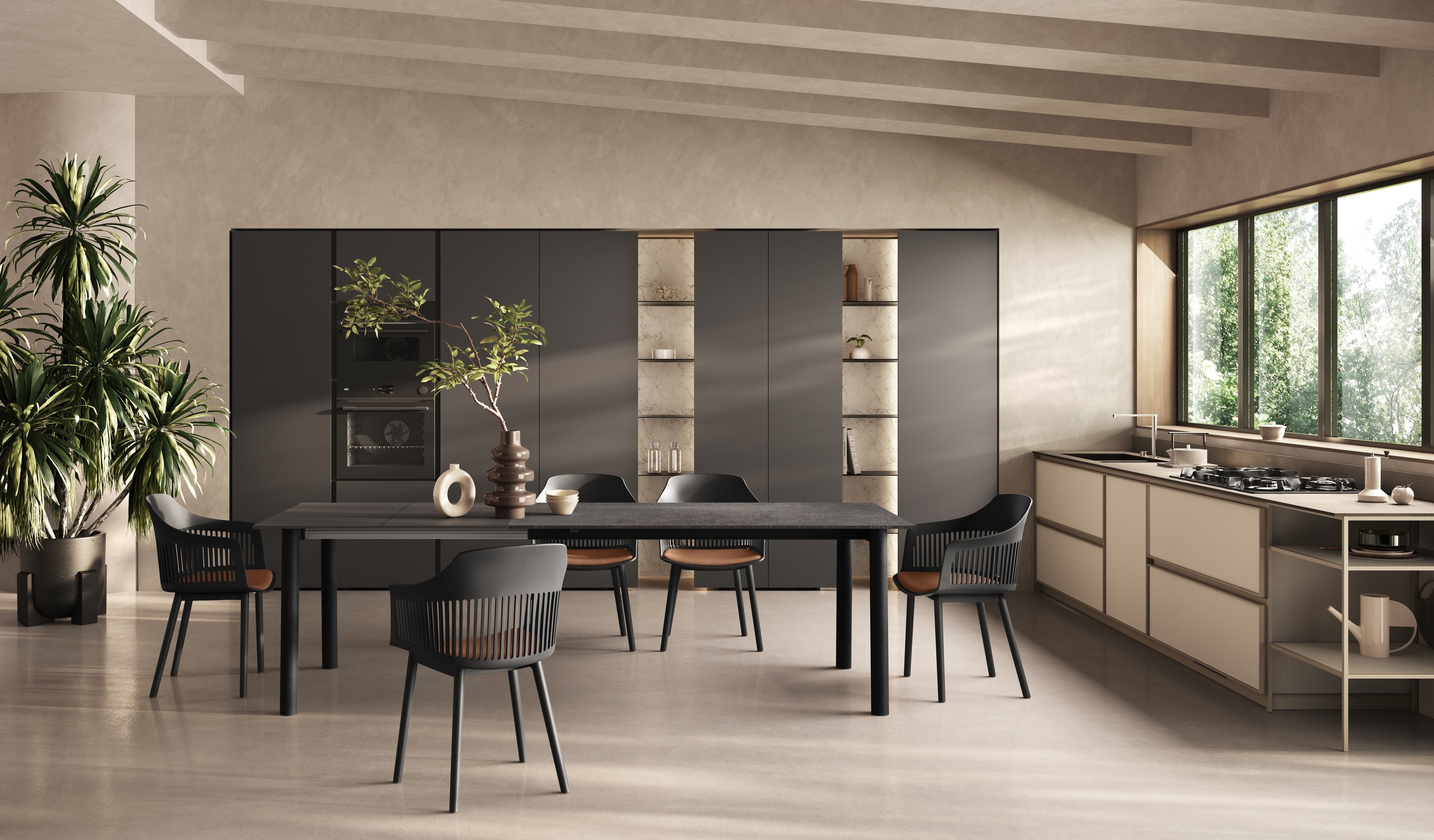
The true innovation in modern collections lies in the engineering: smooth, near-invisible opening mechanisms are seamlessly concealed within slender frames, shaped tops and finishes that perfectly align with the surrounding living area decor.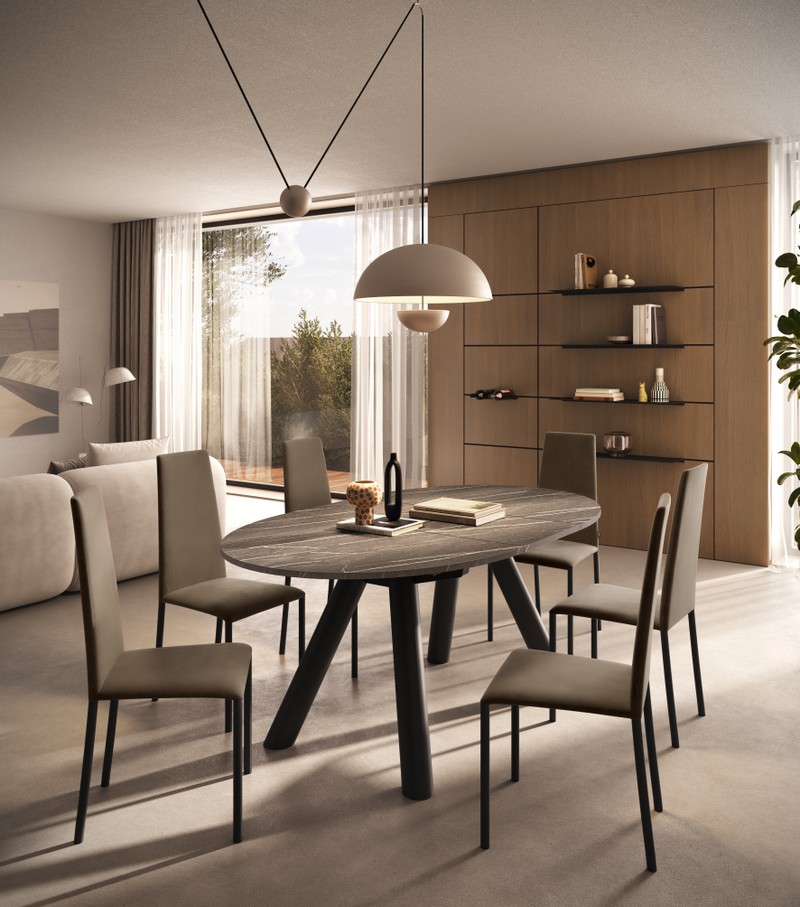
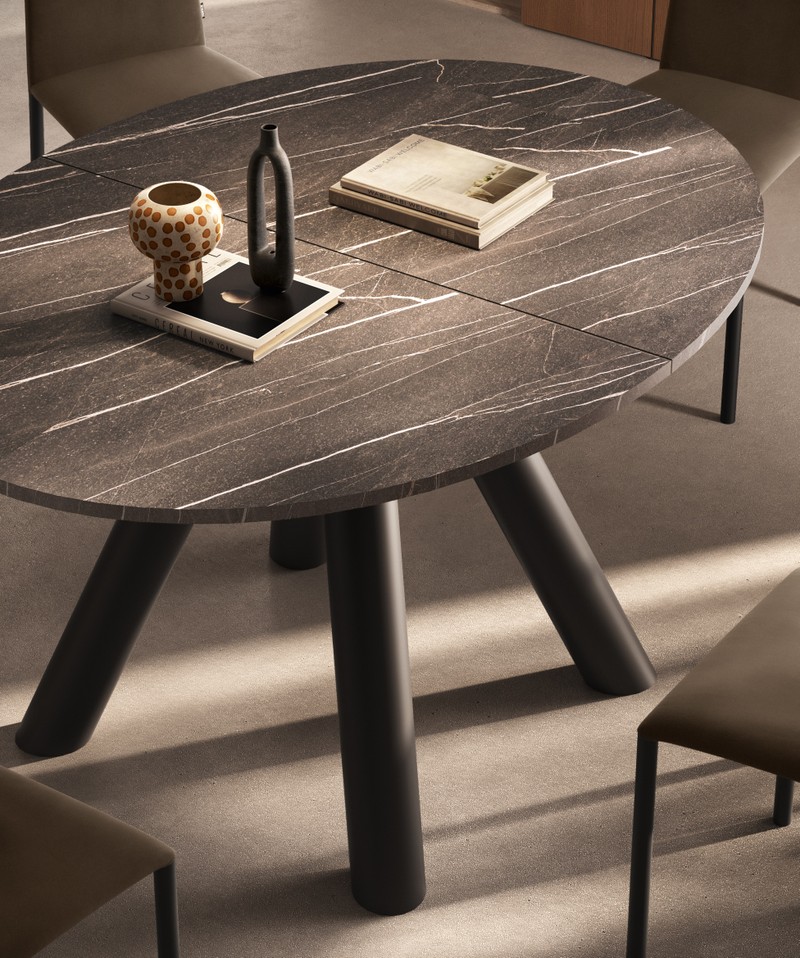
Today, choosing an extensible table no longer means sacrificing fluid geometries: an extensible round table like Note (pictured above) transforms into a generous oval surface on demand, elegantly accommodating family and guests alike.
Shapes, mechanisms, and space planning: how to make the right choice
Before investing in a modern dining table, consider these practical criteria to ensure maximum comfort during everyday use and entertaining:
1. Closed and open dimensions: accurately measure your available floor space against the table top’s maximum extension. Allow at least 80-90 cm) of clear space around the perimeter to ensure guests can pull back chairs and move freely.
2. Mechanism simplicity: favor smooth-sliding opening systems that can be operated easily by one person without exertion.
3. Leg placement and chair spacing: determine seating capacity based on leg configuration, noting that central frame models provide unobstructed legroom for all guests.
4. Room layout compatibility: an extensible rectangular table suits long, narrow layouts, whereas soft geometries optimize traffic flow in square or high-traffic rooms.
5. Extension storage: confirm whether the extensions are stored internally beneath the table top or require separate storage space when not in use.