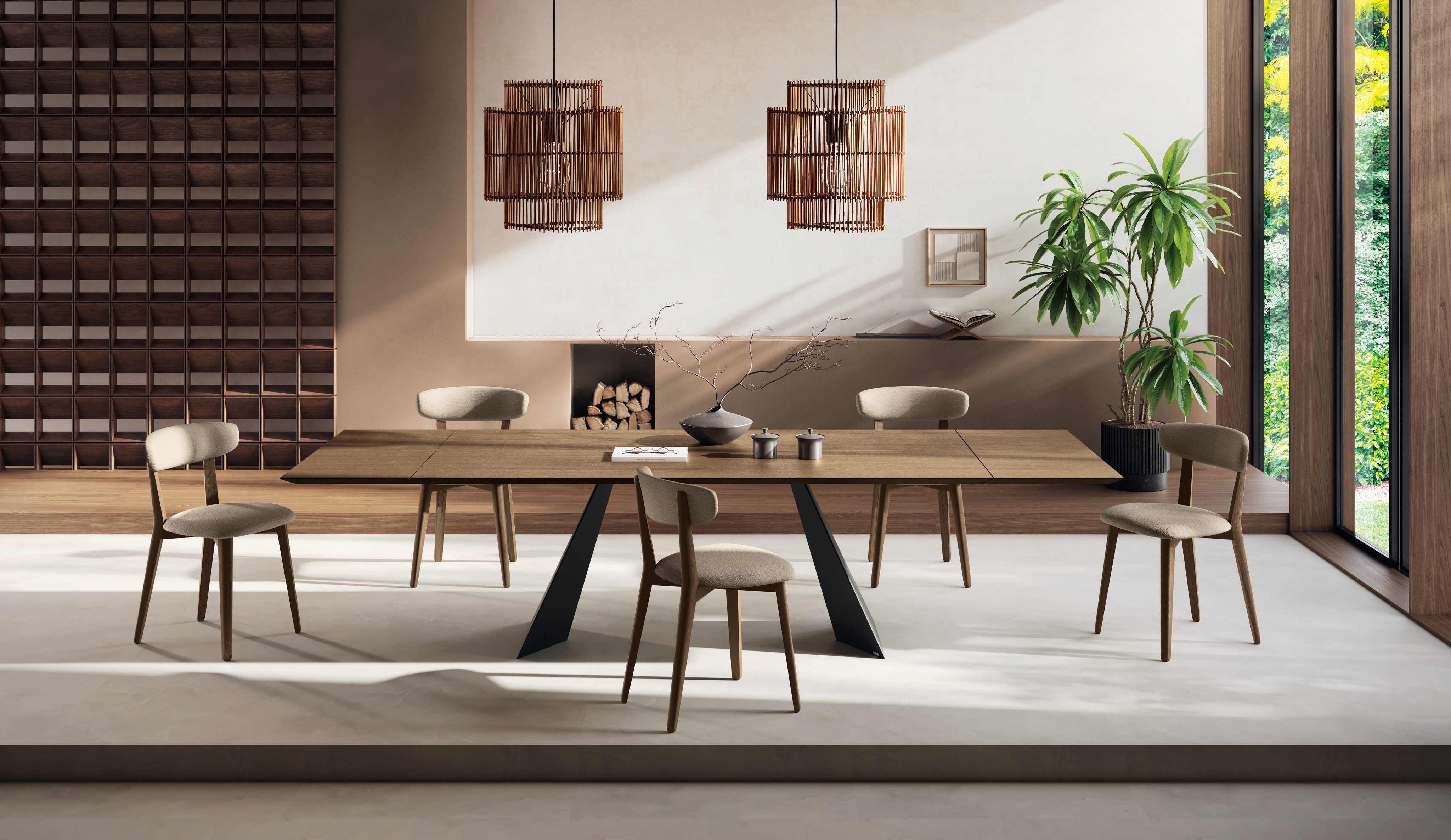
Furnishing a small home
The ultimate guide to optimising every centimetre at home
Buying a small home often represents an act of freedom. It could be your first investment in the city centre to cut down on hours lost in traffic, or that much-desired one-bedroom flat that finally marks the start of a new independence. However, initial enthusiasm must soon face the needs of day-to-day life: books that demand a place, the pleasure of hosting friends for dinner and that shoe collection that seems to expand into every corner.
The good news is that furnishing a small home does not mean having to give up what you love. On the contrary, it is the perfect opportunity to rethink spaces in a smart and creative way, optimising the floor plan to achieve maximum domestic comfort. If you can't wait to get started, this is the guide for you: from ergonomic logic for compact kitchens, living rooms and bathrooms, to Scavolini BoxLife solutions for small bedrooms, to colours and lighting to copy and design errors to avoid, you will find everything you need to radically transform your small flat.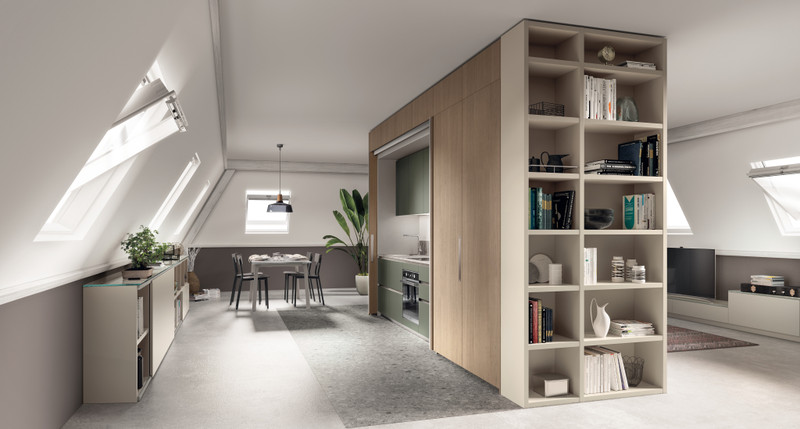
Basic furnishing principles for small spaces
Before letting yourself be won over by the first sofa you come across (even if it was love at first sight!), it is essential to take a moment to analyse the property. The feeling of “oppression” often felt in small floor areas rarely depends on the lack of square metres: it is the result of incorrect management of light or the colour palette. The first step to make a room look bigger consists of learning some optical tricks to expand volumes and give your home more breathing space. Where to start?
The power of natural light
Light is the best friend of modest spaces: a gloomy room inevitably tends to shrink, while one flooded with brightness immediately gains width.
- Maximise light from openings: the secret to a fresh look is to avoid heavy curtains that obstruct the windows. It is better to opt for lightweight, filtering fabrics, which allow sunlight to flow through without compromising privacy.
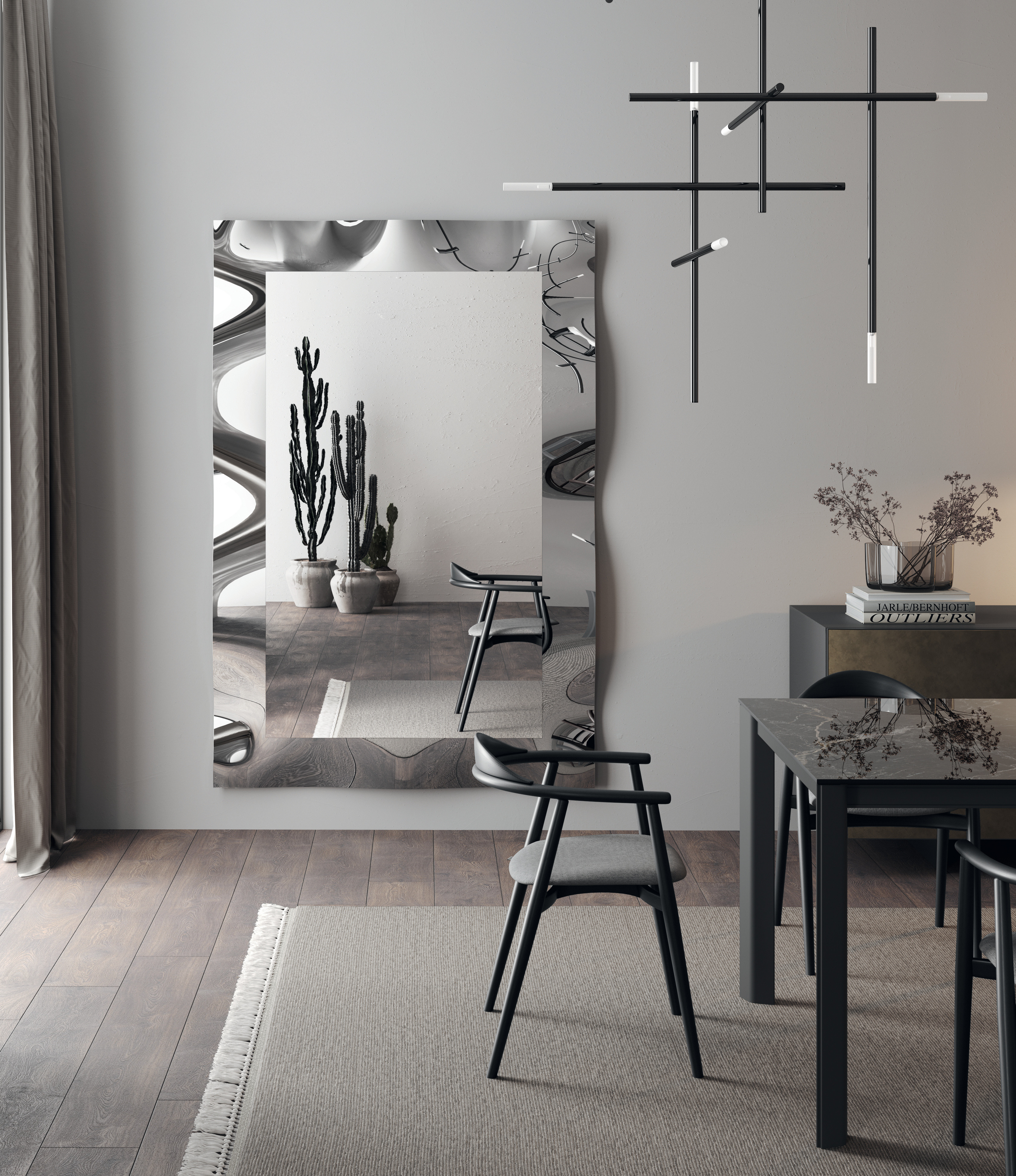
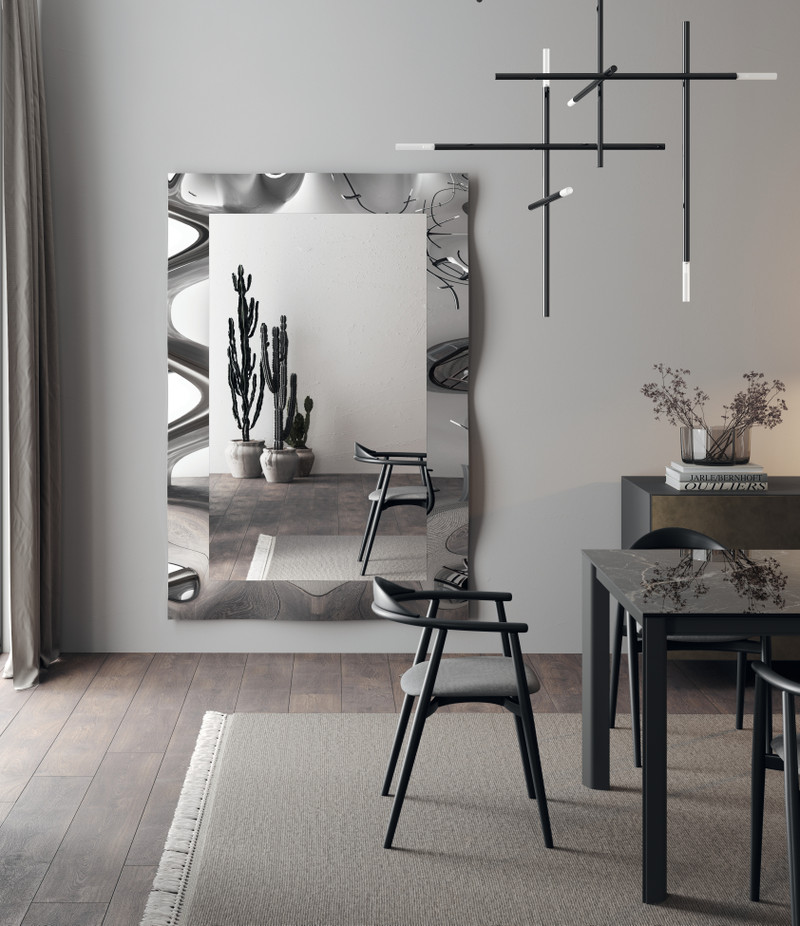
- Use reflections: if your flat does not boast large windows, you can play it smart with mirrors. Placing them opposite light sources serves to reflect the glow and give the illusion of a doubled perspective.
The right proportions
Forget the myth that a small home only requires miniature furniture: in fact, it is the exact opposite. Crowding the living room with a myriad of miniature accessories only generates visual noise and chaos. It is worth focusing on a single sofa with a significant and slender silhouette rather than four different armchairs, especially if you want to furnish a small home with a modern style.
An extra tip from the designer: in this preliminary stage, always start from the current state of affairs. Checking the property’s exposure and structural constraints (such as load-bearing pillars) will help you place mirrors and main furnishings strategically.
How to choose furniture
In fifty square metres, every centimetre is precious and leaves no room for chance. In this context, furniture must have a precise mission or, ideally, two, otherwise you risk taking away space for cultivating your passions. The choice must therefore move towards “chameleonic” accessories, capable of evolving along with your daily needs.
Multi-functional and convertible furniture
These proposals represent concrete solutions to virtually multiply the home’s floor area:
- convertible consoles: placed in the entrance hall, they can evolve with a simple gesture into a table ready to accommodate six people;
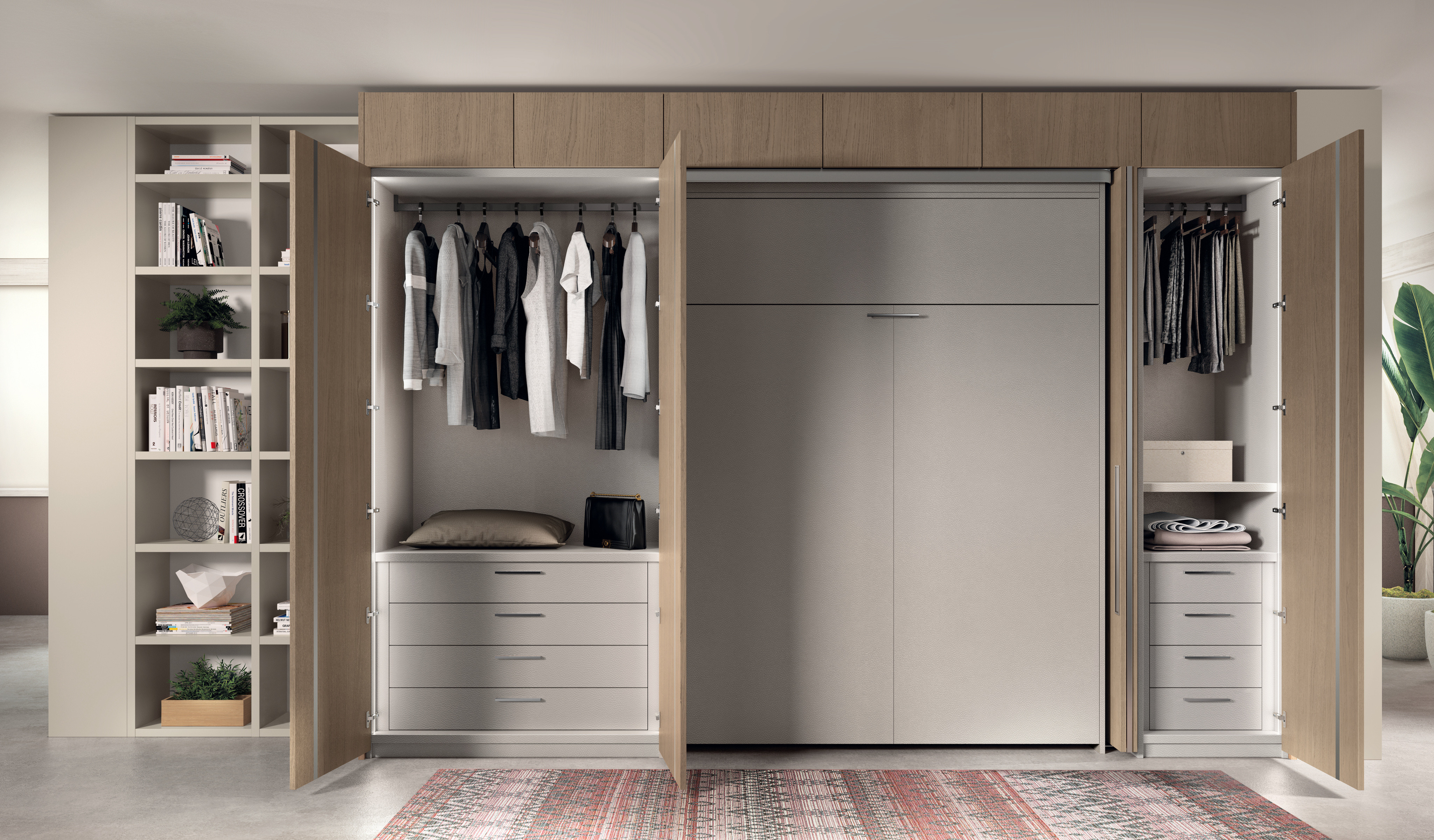
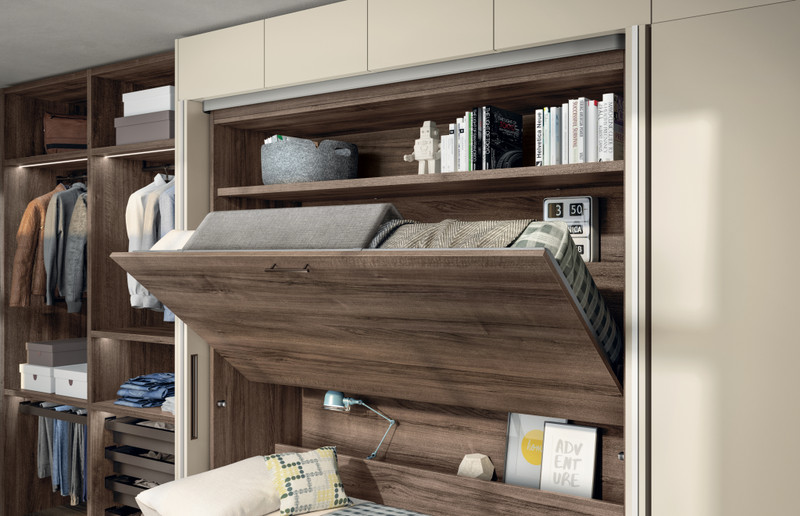
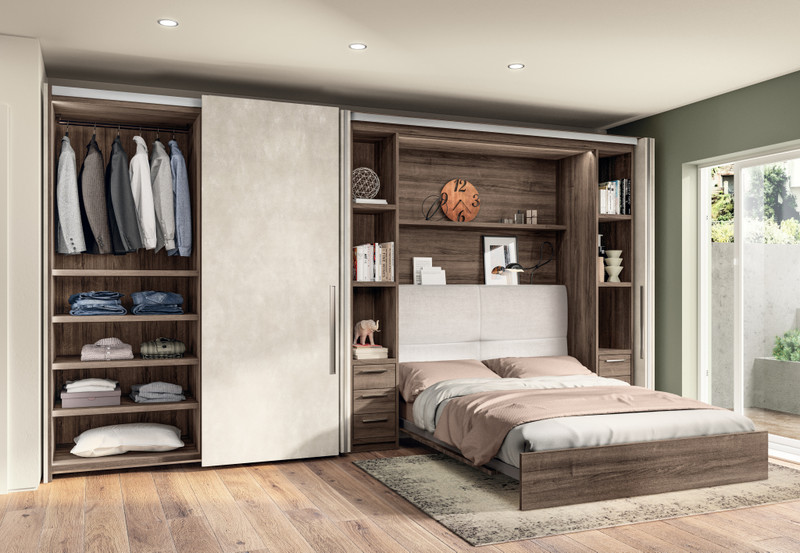
- storage beds: they offer a compartment so spacious it can accommodate an entire seasonal wardrobe change, the bulkiest blankets and even sports equipment, emptying entire drawers in the wardrobes;
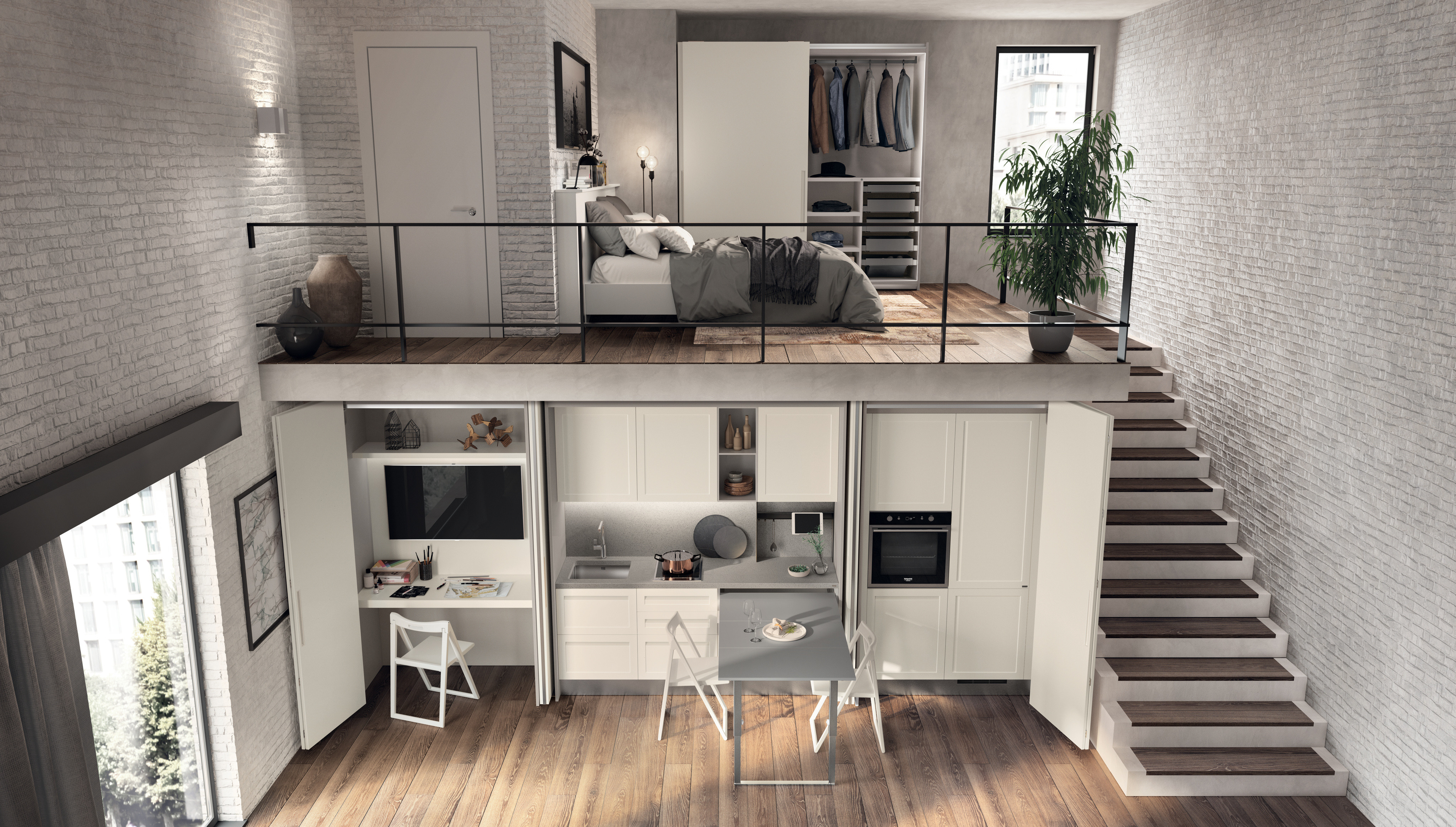
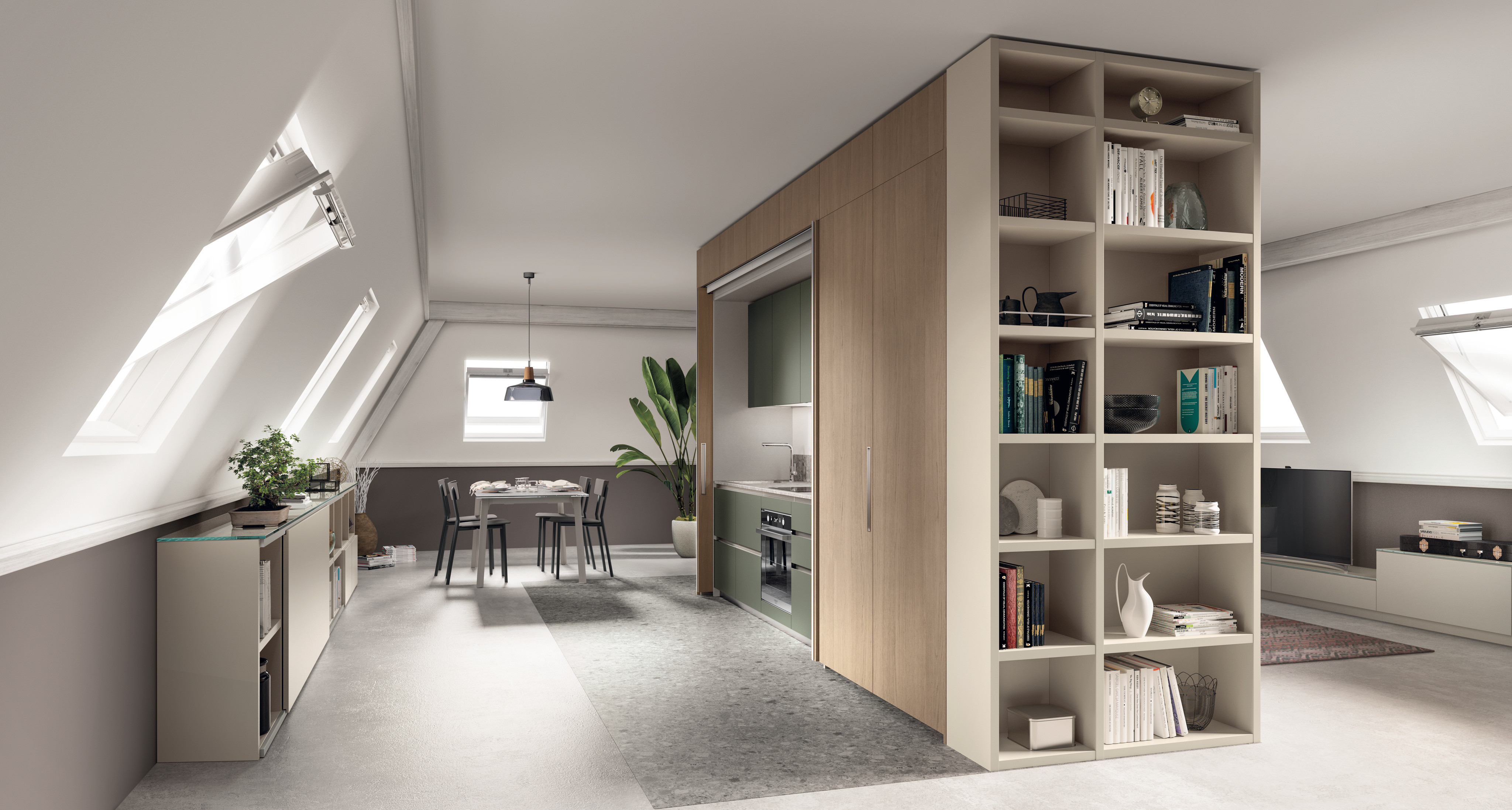
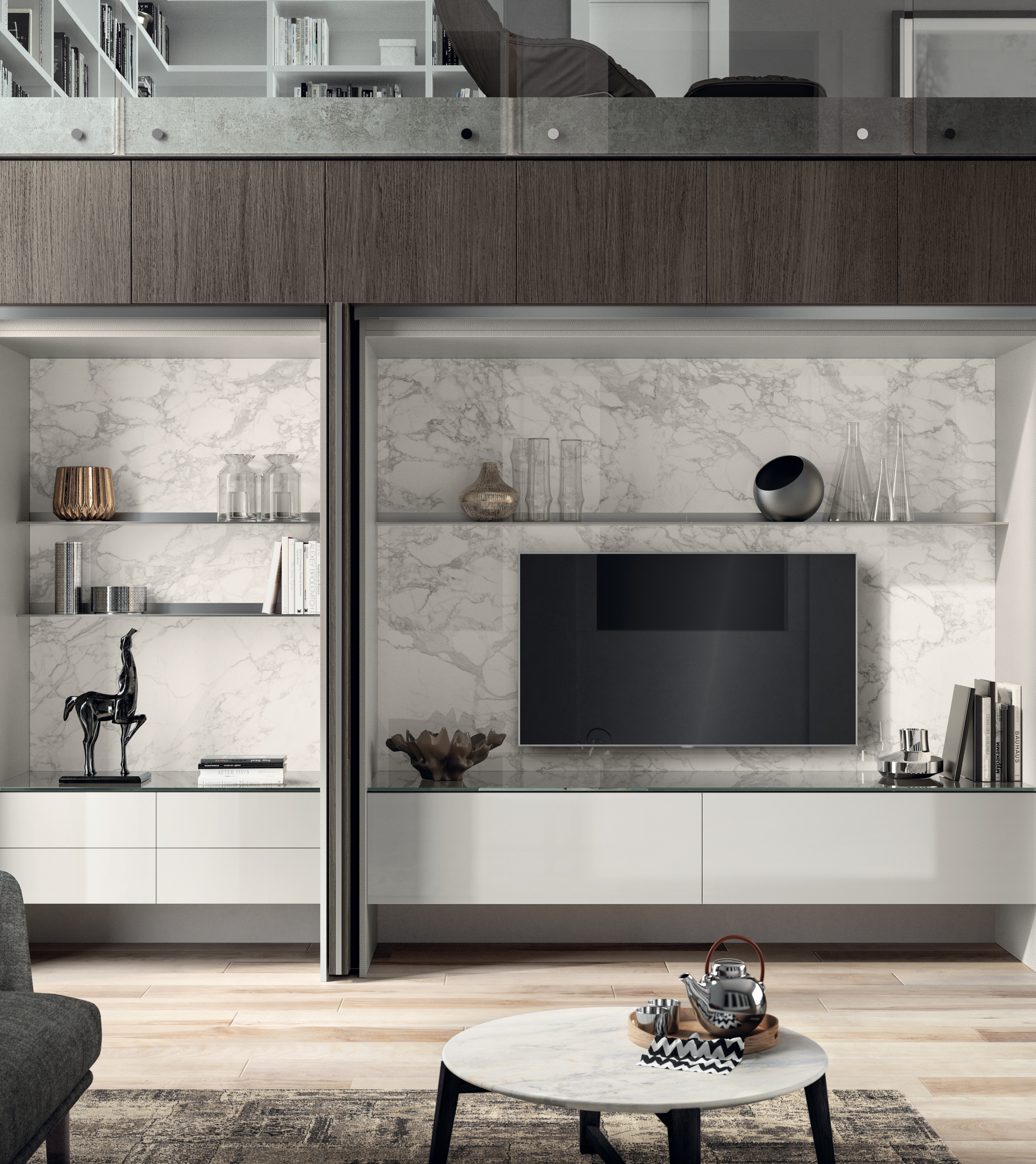
- multi-functional systems: advanced cabinets and storage units are now able to perform several functions at once, furnishing an entire wall.
Custom-sized furniture
Unused corners are the most insidious enemy of a small floor plan. With the right intuition, architectural constraints are transformed into strengths:
- tailored approach: often overlooked areas such as niches and under-stairs can become bookcases or built-in wall-mounted cabinets;
- accessibility: storing items for occasional use, such as suitcases, up high allows you to clear the lower shelves for your daily essentials;
efficiency and order: learning how to store things in the right places is an art that not only restores order, but optimises the time of your daily routine (how much time saved looking for keys or important documents?!).
Small kitchen: what to consider
Designing a kitchen in a studio flat often represents the most complex challenge. The objective is to make appliances, larder and worktop coexist harmoniously, while avoiding cooking smells from invading the adjacent living area. To achieve high-level performance even in a few square metres, it is necessary to follow some principles.
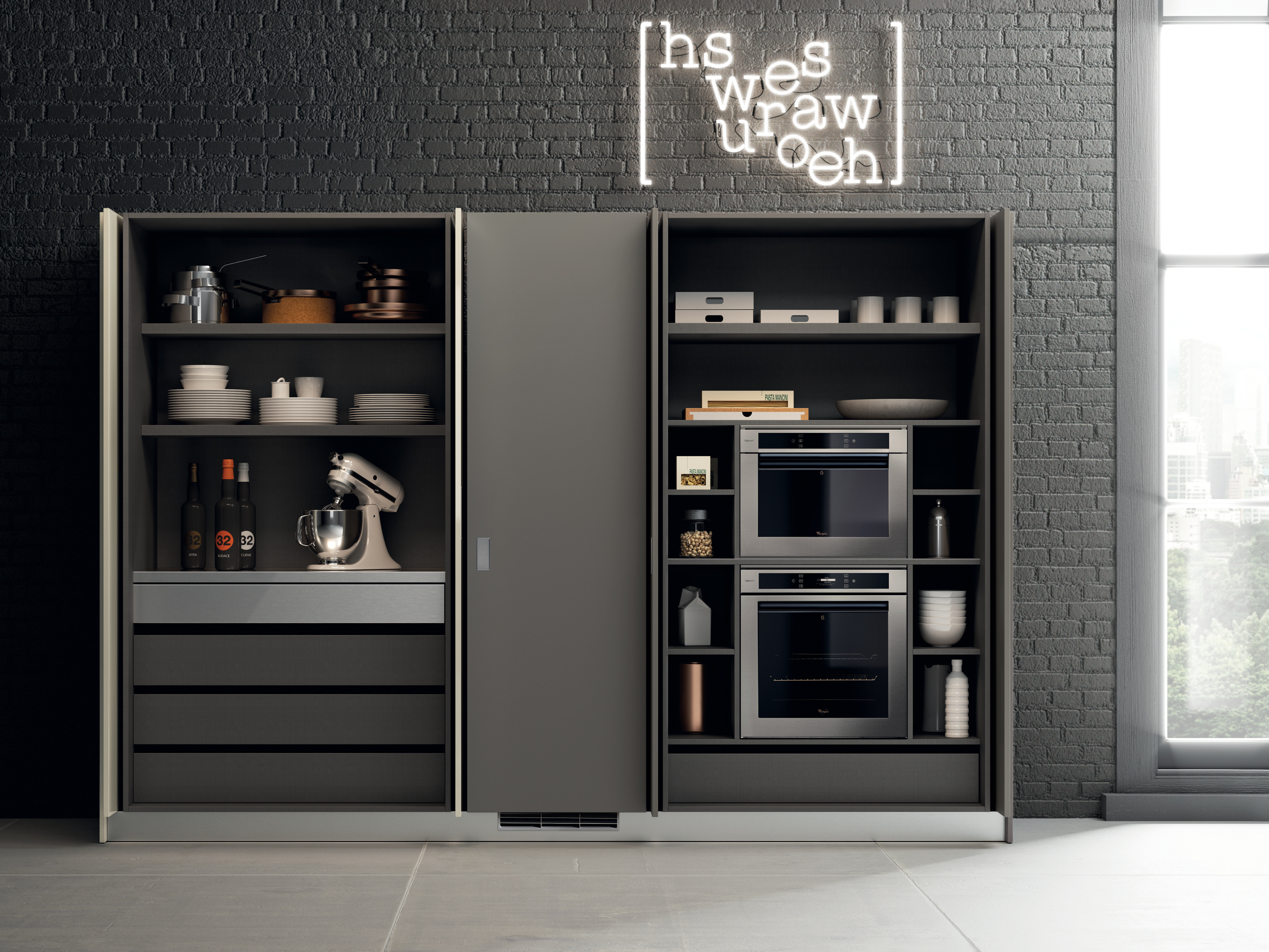
- Vertical development: full-height wall units help to exploit every available centimetre, offering extra storage areas for utensils and supplies.
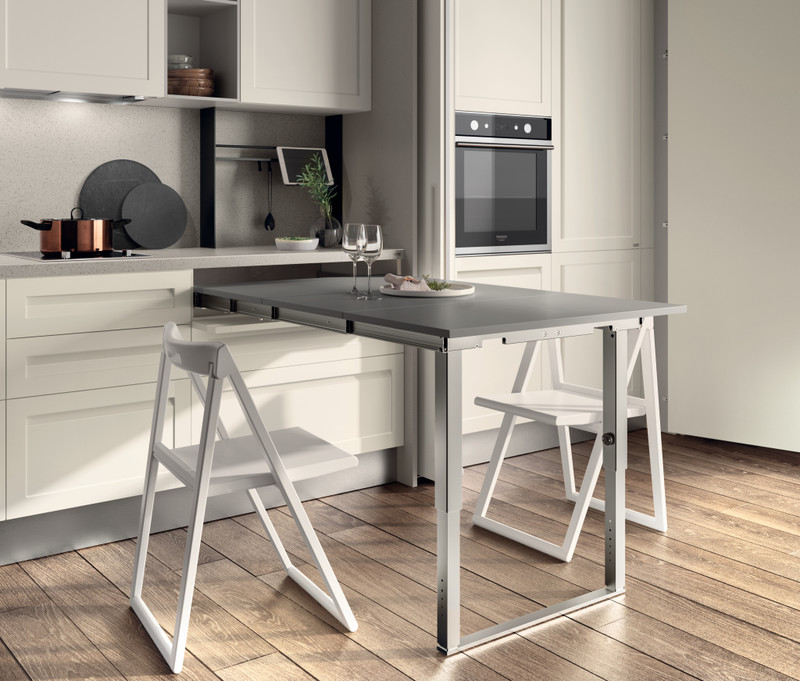
- Concealed elements: pull-out tables from BoxLife systems and sliding worktops expand the workspace only when actually needed, keeping the passageway free the rest of the time.
- Methodical order: especially during the refurbishment stage, the configuration of the kitchen modules has a direct impact on the positioning of the “invisible network” of utility systems. Defining exactly the type and height of the appliances is therefore essential for the correct setting of the water and gas pipes and the lighting points.
A trick of the trade: in addition to the standard 60 cm wide base units, today you can consider inserting new 75 cm modules, which offer superior storage capacity and greater ease of use, provided there is careful and meticulous measurement.

Small living room: how to enhance it
And what about the living room? Furnishing a small but welcoming living room requires targeted measures, including raising the furniture off the floor. Opting for a sofa with slender, tapered feet is a masterstroke; it allows the eye to follow the continuous line of the flooring, creating a sense of uninterrupted space. The effect is much like wearing high heels to elongate the silhouette: the sofa gains a more elegant stature, while the room itself is given room to breathe.
Sociability and flexibility in the living room
But how to reconcile aesthetics with the desire for sociability? If what you imagine is a small living room with a table, you must opt for consoles or extensible models, designed to disappear or transform as needed, avoiding hindering movement during the daily routine.
Smart home office
In an age where remote working is a well-established reality, the challenge is to create a dedicated corner without having an extra room. The secret? Dividing up rooms without using walls, thus maintaining the balance between professional and private life. How? Multi-functional wall-mounted systems, primarily Scavolini’s Fluida system, are the true veritable game changers, as they allow for the creation of customisable bookcases that integrate concealed home office workstations. The main advantage? The possibility, at the end of the day, of sliding a door to forget about deadlines and fully enjoy the evening.
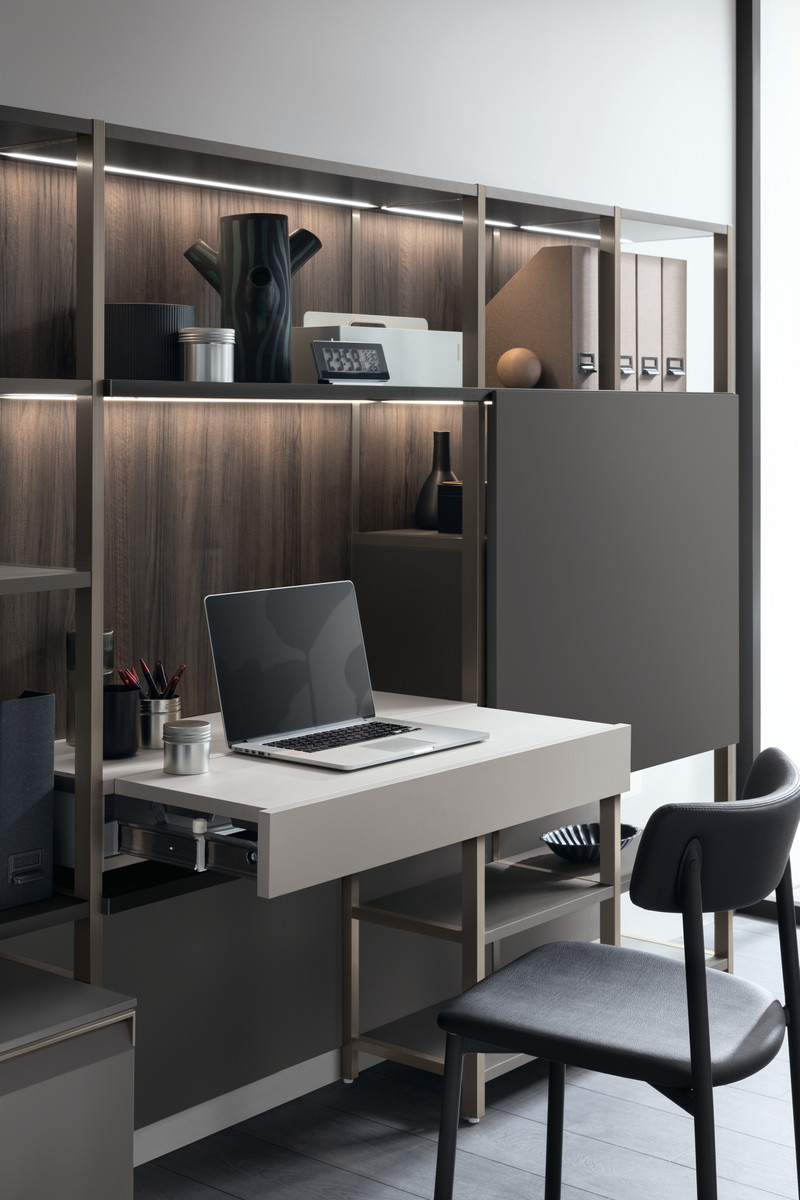
If you are aiming for contemporary aesthetics, there are specific solutions for furnishing a small living room with a modern style, which combine clean-cut silhouettes and maximum functionality.
Small bedroom: practical ideas
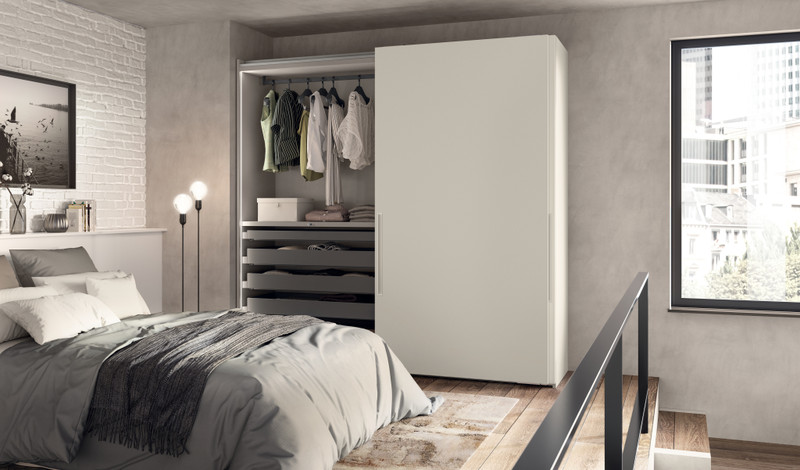
In the sleeping area, the objective is to identify furniture ready to accommodate one’s world without compromising the peace and quiet essential for a good night’s sleep. When the floor area does not allow for the installation of a classic six-door wardrobe, one must find clever ways to transform every structural indentation into an opportunity.
The walk-in wardrobe: efficiency beyond square metres
It is a common misconception to view a dressing room as a luxury reserved solely for expansive estates. Through the use of bespoke modular systems, it is possible to design a small walk-in wardrobe even within minimal footprints, reclaiming even the most challenging corners. It requires:
- organisation: the secret lies in assigning a dedicated place to every accessory, eliminating the clutter that creates a “suffocating” atmosphere.
- storage beds: these provide a generous compartment comparable to a dresser, ideal for storing bed linens.
Bedroom furnishing accessories and matching furniture
To ensure a small sleeping area remains beautiful and harmonious, one must attend to tactical details:
- mirrors: positioned strategically, they expand the space and enhance natural luminosity.
- wall-mounted bedside tables: by keeping the floor clear, they elongate the room and foster a sense of greater airiness.
Small bathrooms: tactics that work
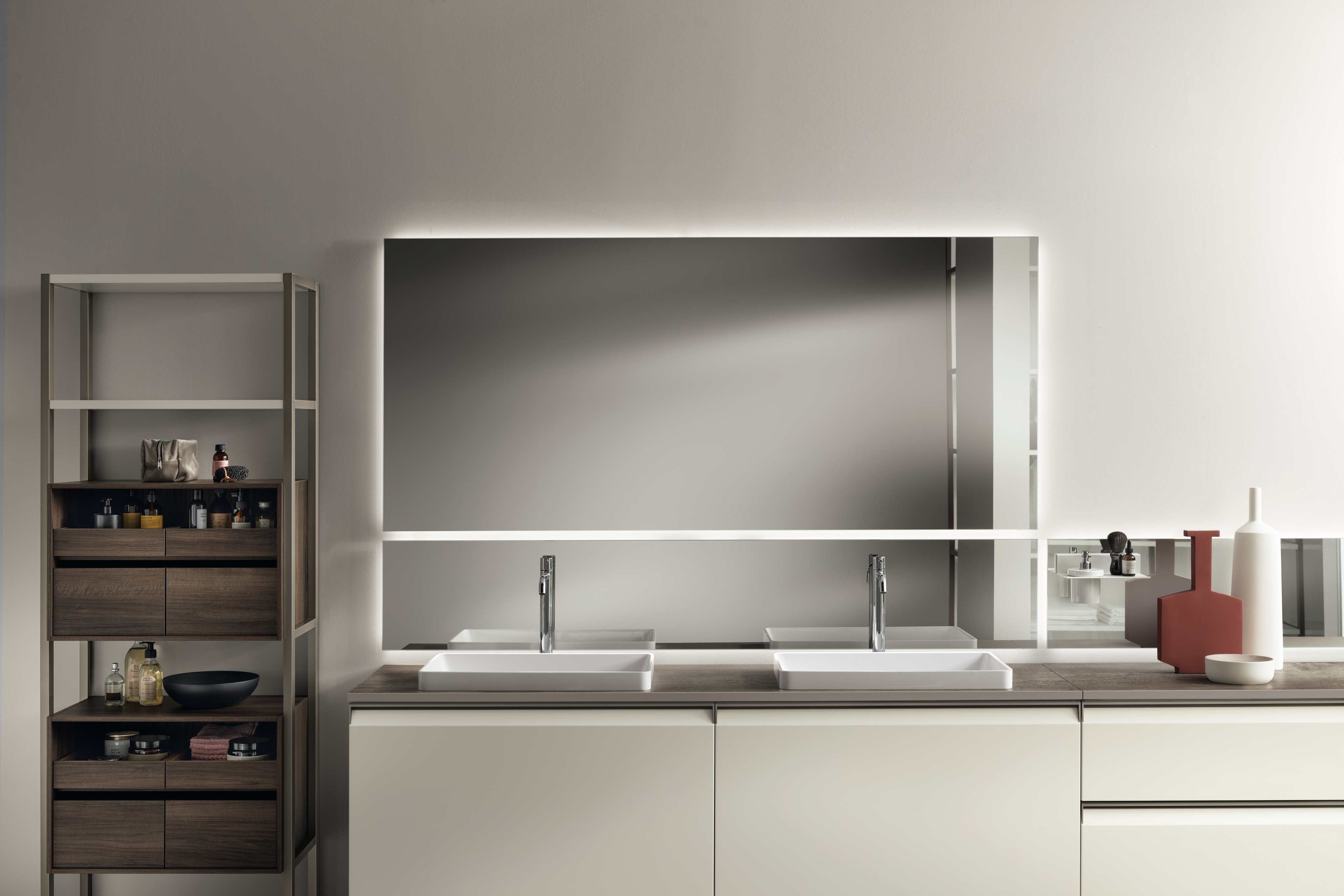
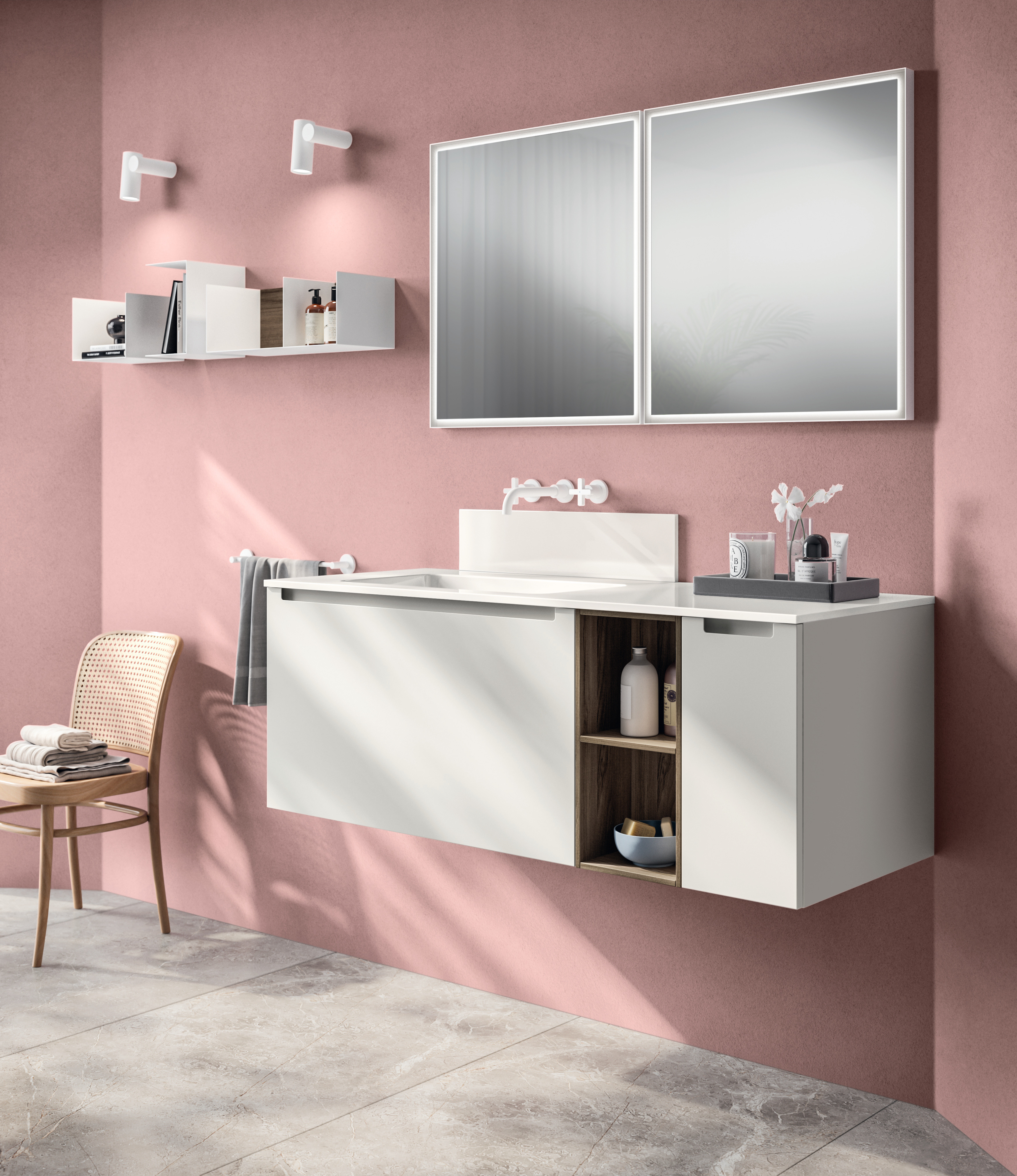
While the bathroom is often the most compromised area in a compact floor plan, it can be transformed into a well-being sanctuary by following principles of transparency and wall mounting. A small bathroom with a grand design must rely on reflective materials and wall-mounted sanitary ware. Because these units are elevated, they not only simplify cleaning but also visually expand the floor area.
Layout logic for challenging bathrooms
The layout must adapt to the specific architectural configuration of the room.
- Long and narrow bathrooms: here, the priority is aligning all plumbing on a single side, utilising the depth of the room without obstructing the passageway.
- Blind bathrooms: in the absence of natural light, a sophisticated lighting scheme supported by mirrors is essential to dispel the closed-in feeling typical of confined spaces.
Laundry integration
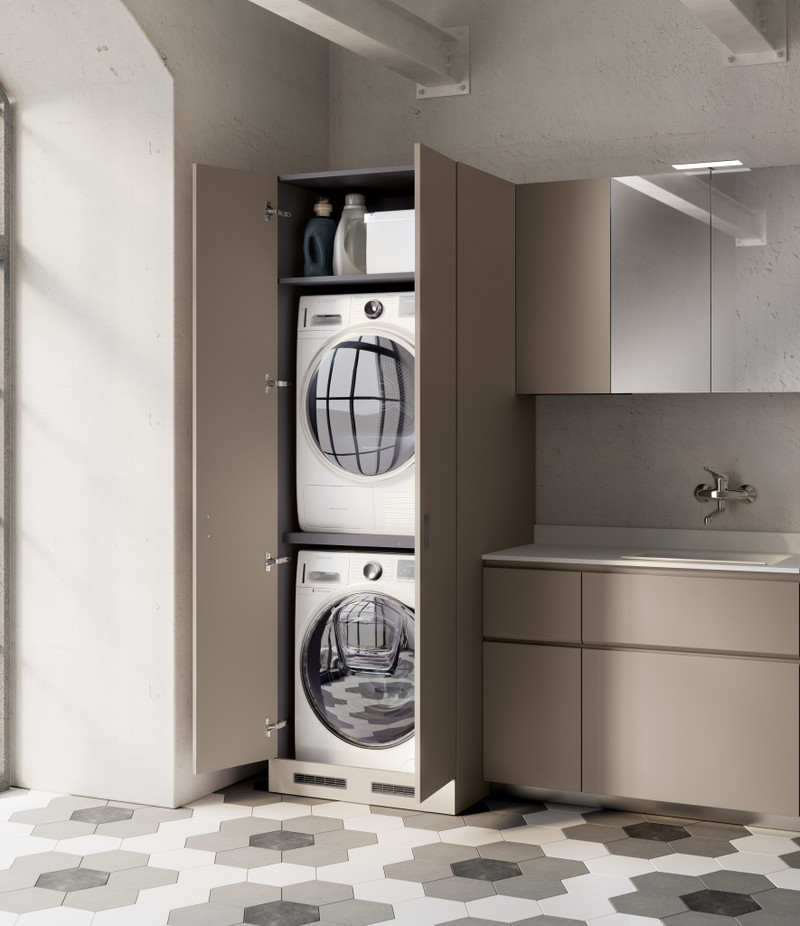
Should the square footage also need to accommodate a laundry area, dedicated niches can be carved out for a washing machine and drier. Utilising space-saving furniture designed specifically for the laundry room helps conceal appliances, maintaining clean, tidy aesthetics.
Colours that visually enlarge proportions
Forget the dogma of absolute white. While it remains a fine ally for small-home furnishing, you can compose a palette with colours capable of deceiving the eye and broadening the horizon. You might mix:
- warm greys and powder blues: these lend a three-dimensional quality to the walls;
- pastel hues: ideal for softening the boundaries of a room;
- shades of a single colour: staying true to a defined palette helps create harmonious and coherent environments, eliminating harsh transitions and interruptions.
We have already noted how decorating with mirrors is another stratagem for enlarging proportions without resorting to costly structural interventions. Their efficacy depends on millimetre-perfect placement:
- doubling volumes: a full-height mirror installed at the end of a corridor duplicates its perceived length;
Lighting: using it to your advantage
How many ceiling lamps or wall lamps are you planning on installing? Lighting is not merely a functional necessity; it is a technical instrument to manipulate the perception of the home. Relying on a single central source is a widespread error: a lone overhead light creates harsh shadows in corners, which ultimately reduces the sense of depth.
Layered lightingTo expand proportions and make the home feel more intimate, airy and comfortable, we suggest integrating multiple levels of light, each with a specific mission:
- technical lights (LEDs): installing midway profiles in the kitchen is crucial for a safe and practical culinary experience.
- ambient lighting: floor lamps placed beside seating define cosy nooks, such as a reading corner, which add warmth to the living room.
- accent lights: the use of adjustable spotlights allows you to highlight material textures or decorative elements, shifting focus and creating dynamism.
Common pitfalls to avoid
While furnishing your flat (or even that seaside home with space-saving solutions you’ve had your eye on for some time), pay heed to certain “slips” that risk compromising the management of space.
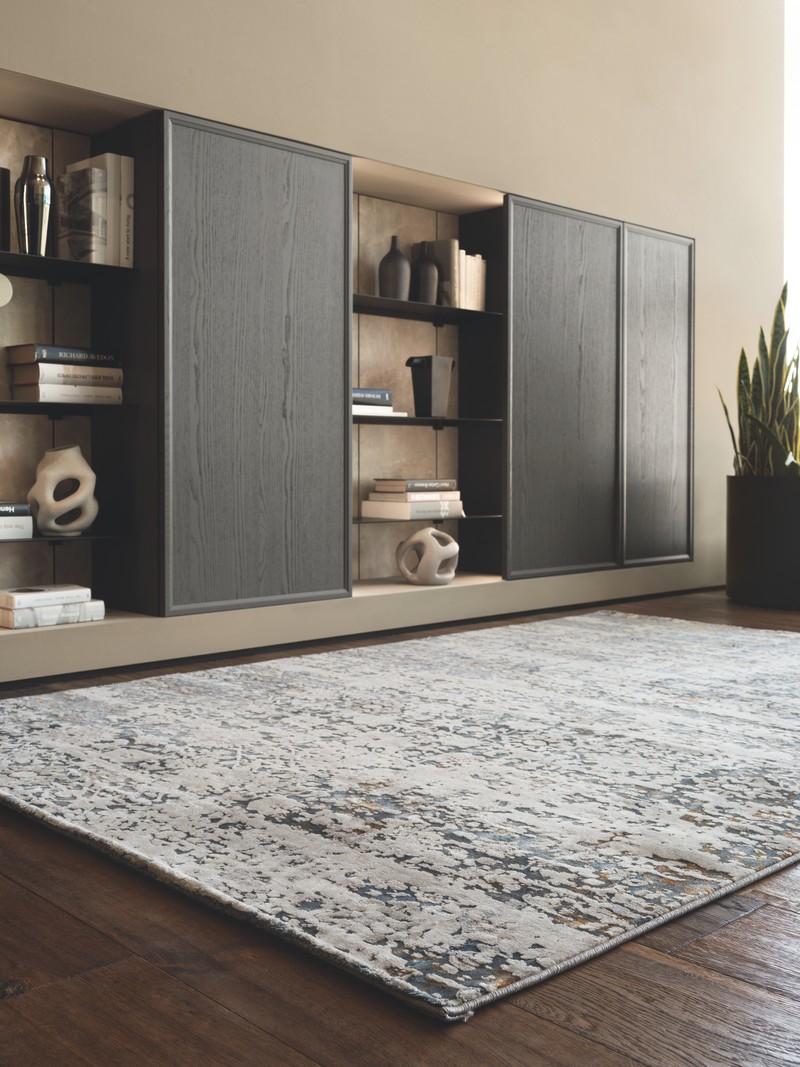
- Miniature rugs: a frequent mistake is laying small rugs. Technically, a rug that is too narrow fragments the floor surface, making the room feel even more constrained. A small home requires a generous rug, at least as wide as the sofa.
- Excessive decoration: we know it is difficult to resist, but crowding shelves with too many trinkets generates unnecessary visual noise. Practise decluttering, focusing on objects that truly tell your story, rather than scattering your attention on dozens of souvenirs.
- Heavy curtains: thick fabrics block natural light, an indispensable element for expanding volumes. For a refined flat, prefer the lightness of linen or sheer cotton, fabrics that guarantee privacy without weighing down the eye.
- Hinged doors: underestimating the swing radius of hinged doors can compromise the functionality of corridors. Wherever possible, installing sliding or pocket doors is a winning choice to gain space and favour the circulation of light.
Check-list for furnishing your small home
Have you memorised everything? Before you begin designing your small home, save this essential to-do list:
- current state: verify structural constraints and utilities before any purchase;
- small kitchen: define the appliance distribution to configure modules and plumbing correctly.
- small living room: opt for sofas and TV units with high legs to give the room “breathing space”" and ensure maximum flexibility.
- bedroom and bathroom: prioritise modular systems for the walk-in wardrobe and wall-mounted sanitary ware to free up the floor.
- errors to avoid: eschew rugs that are too small, an excess of ornaments, and heavy drapery.
- fixtures: install sliding or pocket doors to reclaim the space usually lost to hinged door swings.
Furnishing a small home is not a limitation, but a wonderful exercise in style. Stop counting the centimetres and start dreaming big: our experts are ready to help you transform your nest into a splendid abode. Book an appointment at your nearest Scavolini dealer.