Porcelain stoneware kitchen worktops: pros and cons
What should you look for when choosing a porcelain stoneware kitchen worktop?
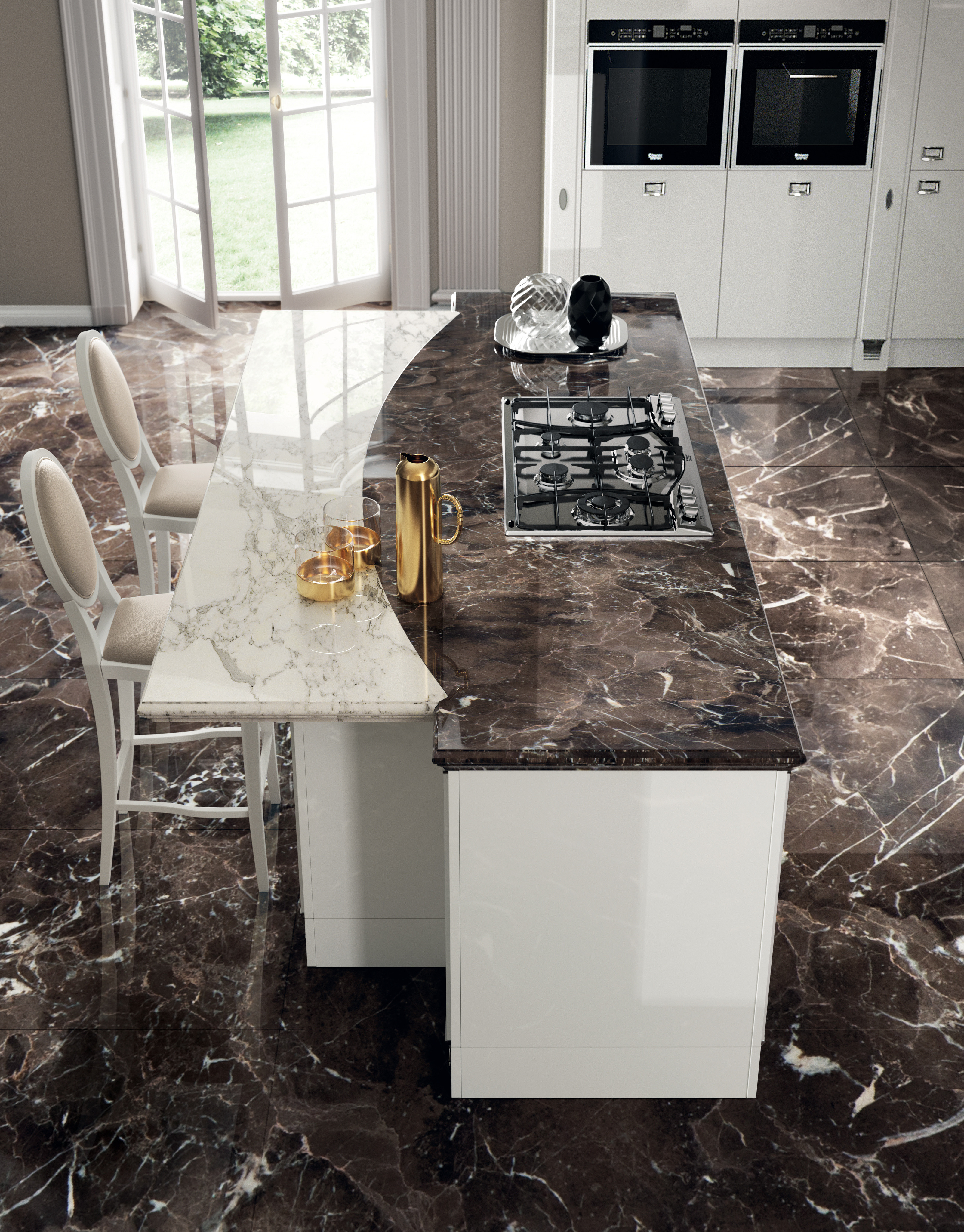
When designing a new kitchen, the worktop plays a crucial role. Everyone desires a kitchen worktop that is beautiful to look at but also capable of withstanding everyday use, fuelling every creative impulse at the hob. If you are considering porcelain stoneware among the various options, you are in the right place. In this article, we will look in detail at the benefits and drawbacks of porcelain stoneware for kitchen worktops, helping you choose the perfect kitchen worktop.

Why choose a porcelain stoneware kitchen worktop?
Opting for a stoneware kitchen top means choosing a modern, reliable, and cutting-edge worktop capable of combining advanced technology with impeccable aesthetic appeal. Stoneware is also known for its exceptional durability and, since it is processed at extremely high temperatures, it is an ultra-compact material designed to withstand the challenges of the most demanding chefs.
The pros of a porcelain stoneware kitchen worktop
If you are in the midst of a battle with the rest of the family over the choice of kitchen worktop, here are your winning arguments to convince them that stoneware is the ideal solution.
- High heat resistance: you can place pots or oven dishes straight from the hob or oven onto the worktop without fear of damaging it or leaving heat rings.
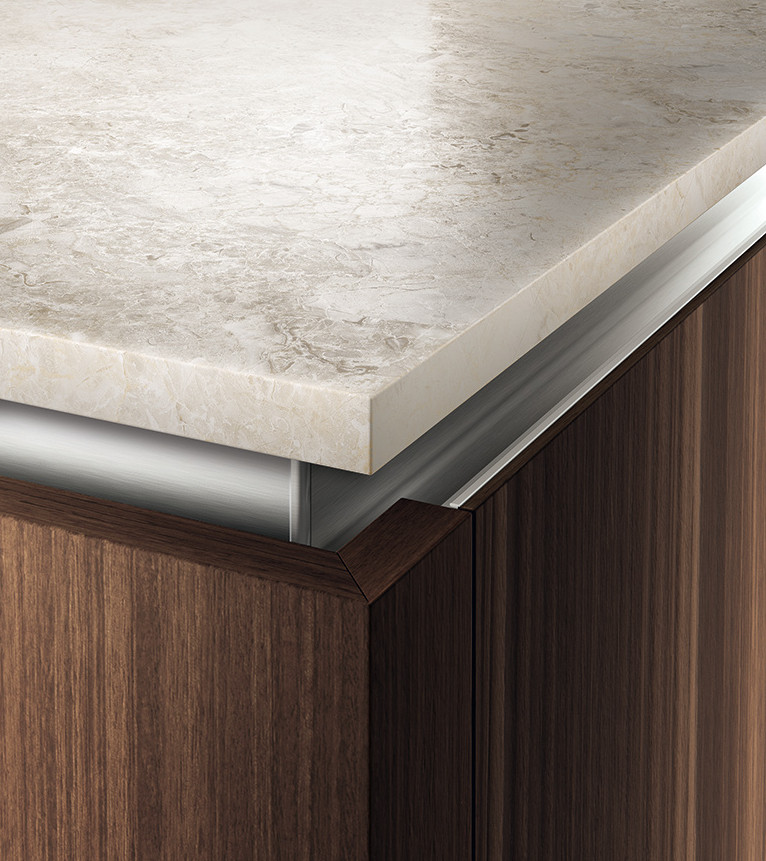
- Scratch-resistant surface: thanks to its hardness, it resists the daily use of blades and kitchen utensils exceptionally well. A question that often comes up: can a stoneware top chip? The answer is to use common sense. Whilst it is an extremely solid material, a violent impact with a heavy object (for example, dropping a pot), especially if concentrated on the edging, could chip it.
- Impeccable hygiene: the absence of porosity prevents the absorption of liquids and counteracts the proliferation of bacteria, making the worktop a totally safe environment for preparing food.
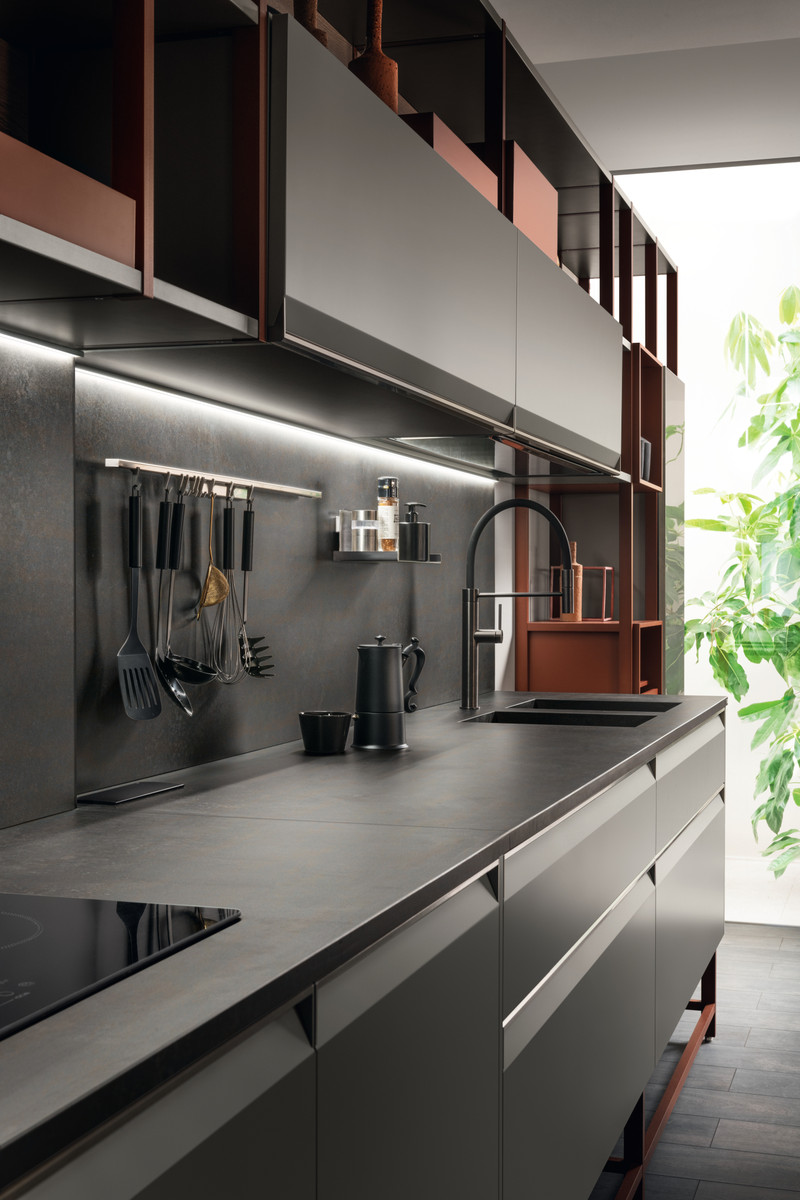
Considerations and possible disadvantages: the cons
To make a truly informed choice in line with your expectations, it is useful to take into account the possible limitations of this material:
- Professional installation required: due to their size and fragility, stoneware slabs require special care during handling and installation. For this reason, it is essential to rely on specialised technicians.
- Initial investment: compared to other options, purchase and processing costs can be higher, but these are more than offset by the durability and performance the worktop delivers over the years.
Maintenance and cleaning of stoneware kitchen worktops
But how do you clean a stoneware kitchen worktop? Maintenance really is minimal. No periodic treatments are needed and the surface is easily cleaned with a damp cloth and normal neutral detergents, preserving its good looks for years to come.
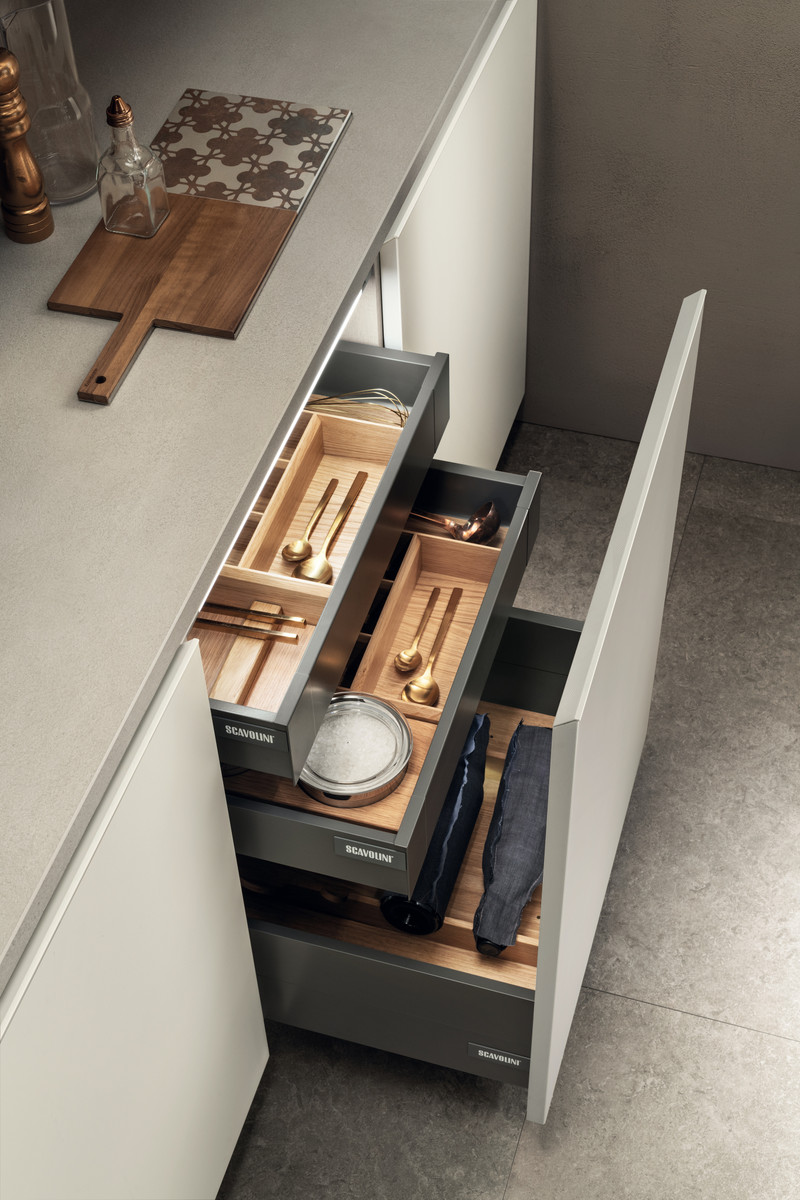
Now you have everything you need: will you opt for porcelain stoneware or would you like to explore other materials for kitchen worktops? We invite you to visit Scavolini dealers to see the samples in person, experience the quality of the materials first-hand, and receive advice on the best solution for your home.