The kitchen sideboard: functional, elegant and timeless
The kitchen sideboard: an enduring icon
Who has not owned a kitchen sideboard at some point? Certain pieces of furniture effortlessly transcend eras without losing their relevance, constantly evolving to meet the demands of contemporary living. Among these, the traditional sideboard stands out. Once reserved for storing fine tableware, embroidered linens and pantry staples, today’s sideboard strips away its rustic heritage in favour of a clean, refined design, all while retaining its generous storage capacity. This makes it an ideal choice for modern kitchens too.

The kitchen sideboard: a cabinet with timeless charm
It is instantly recognisable: a solid modular structure featuring doors and shelves, often completed with drawers, visible compartments, and a broad top surface, perfect for storing lamps, small appliances or decorative objects.

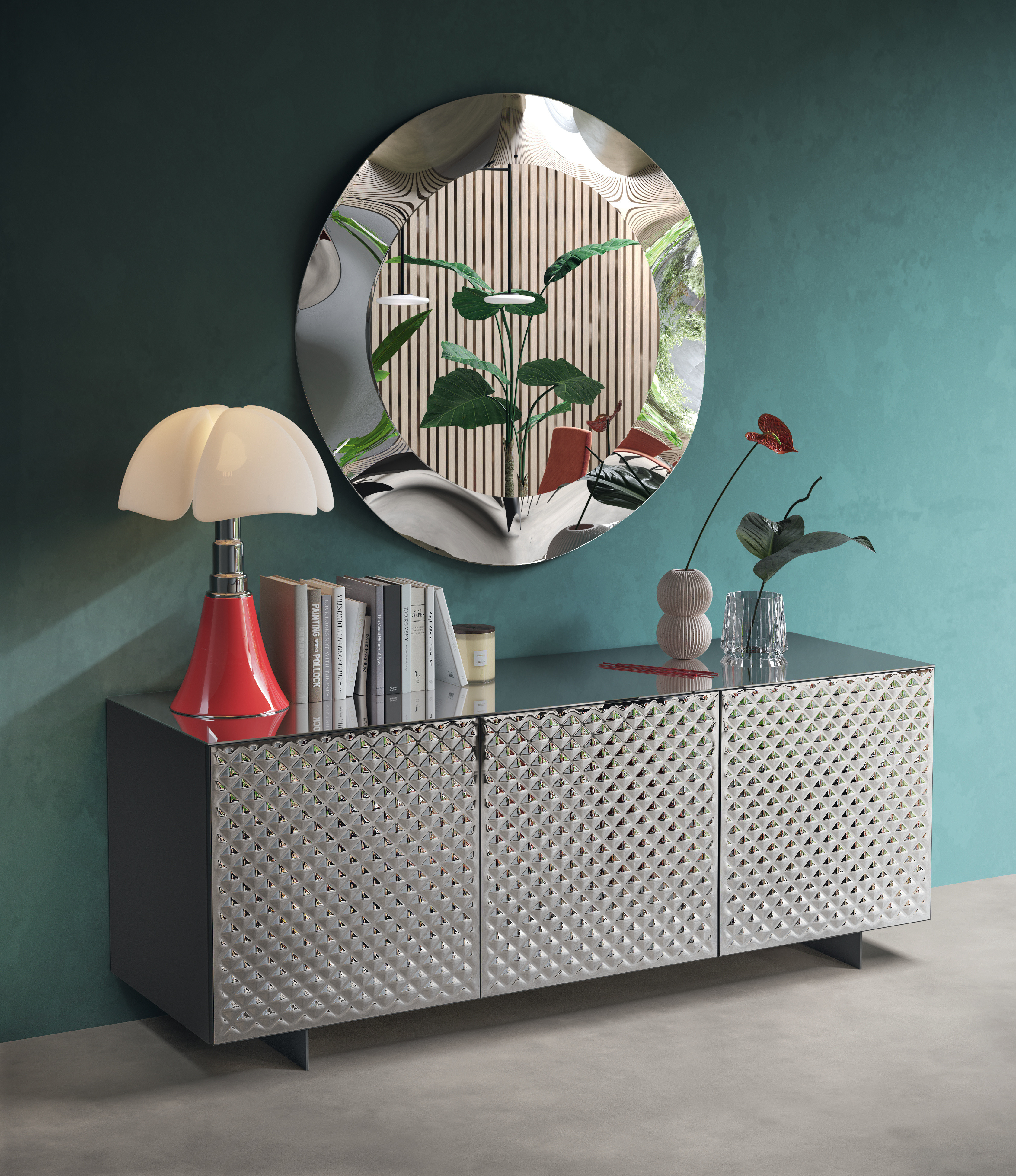
Yet, while preserving its identity intact, the sideboard has undergone a profound formal evolution. It has cast aside the heavy mouldings and elaborate carvings of the past in favour of crisp geometries and new textured finishes. Unsurprisingly, the boundary between the terms sideboard and dresser has blurred, bringing together similar storage solutions designed to elevate the living and dining area.
Modern kitchen sideboards: shapes, materials and finishes
In today’s homes, the kitchen almost always liaises with the living room, demanding versatile, visually lightweight furnishings. The modern sideboard fits this role perfectly, blending into the surrounding architecture. But how do you select the ideal kitchen sideboard?
It is essential to evaluate the kitchen door finishes, the dining table material, metallic details and the overall colour palette. Do not worry: with Scavolini’s kitchen and living room collections, such as the Formalia or Jeometrica models, the sideboard can be configured in complete stylistic continuity with base and wall units, or chosen in a contrasting finish to serve as a striking focal point in the living area. Here are a few options to explore.
Wooden sideboards: warmth and natural appeal
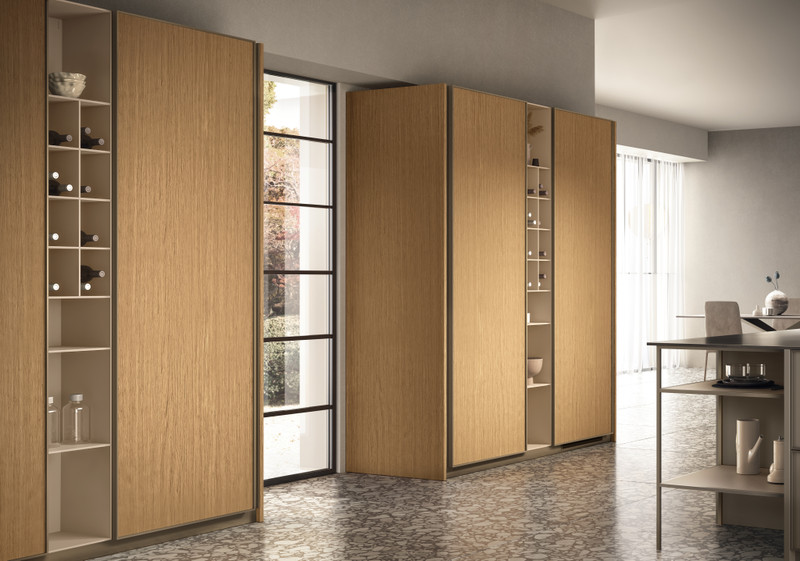
Who says wood (or wood-effect finishes) only belongs in traditional settings? Characteristic grain patterns lend authenticity and depth even to urban interiors, creating a warm, inviting and reassuring atmosphere.
Key tips for showcasing wood finishes:
- pale wood finishes (such as natural ash or oak) pair effortlessly with neutral shades, whites or pearl greys, creating a bright and airy space;
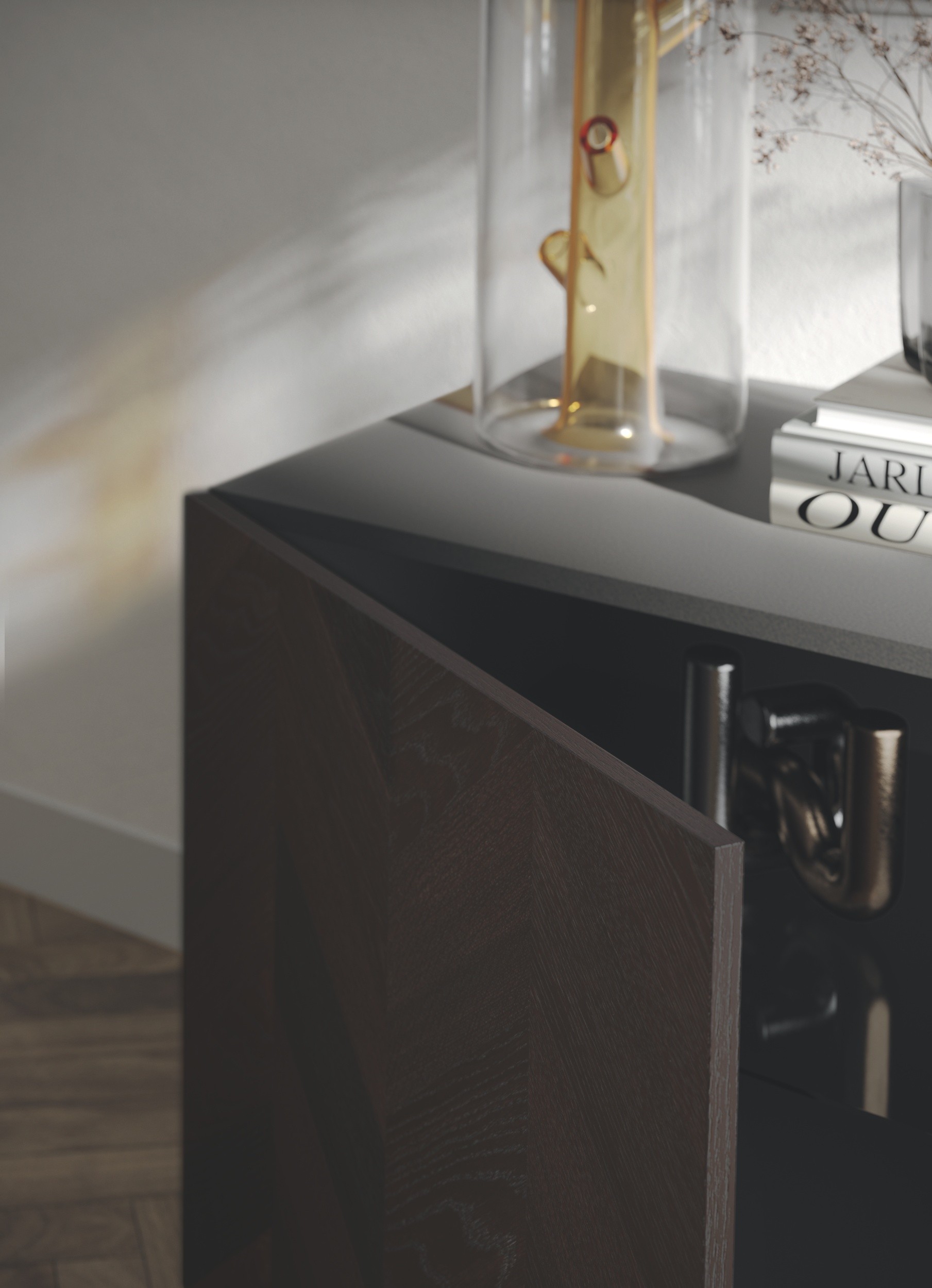
- dark woods (such as walnut or dark oak finishes) liaise beautifully with contemporary quartz surfaces, burnished metal details or dark doors, as highlighted in modern wood kitchen designs.
Understated silhouettes, colours and contemporary details
For fans of a minimalist mood, modern sideboards prioritise continuous fronts, handleless doors and glass inserts. These streamlined volumes are often rendered in matt lacquered finishes featuring powdery hues such as anthracite, terracotta, sage green, dove grey or midnight blue, in contrast with the surrounding walls.
Proportions are equally critical:
- a low, elongated model stretches the wall visually while freeing up space above for artwork, mirrors or designer lamps;
- a tall sideboard maximises available floor space, providing considerable vertical storage capacity without cluttering the room.

The sideboard as a larder: storage and functionality
Beyond aesthetics, the sideboard serves a clear functional purpose: storing and keeping things tidy. Used as a larder, it becomes an essential kitchen ally, housing everything in one place: from stemmed glasses and table linens to food reserves.
The ideal interior configuration? That’s entirely up to you, depending on you often you cook (and the size of your tableware collection).
Doors, drawers and shelves: everything in its place
A thoughtfully planned interior layout simplifies daily routines while maintaining an orderly space.
- Closed doors: ideal for stowing away cookware, small appliances and items best kept out of sight.
- Drawers and extra deep drawers: perfect for cutlery, napkins, utensils and neatly folded linens.
- Adjustable shelves: excellent for optimising cabinet height, conveniently accommodating trays, stacks of plates or airtight storage jars.
- Open compartments and display cabinets: lighten the overall footprint of the unit while creating an inviting niche to exhibit ceramics, stemmed glasses or favourite recipe books.

A practical tip: if using your kitchen sideboard to store food reserves and dry goods, position it away from direct heat sources (such as ovens or radiators) and cooking steam to ensure food items remain fresh.