Floor-standing bathroom cabinet: 5 tips
5 things to check before purchasing a floor-standing bathroom cabinet
Falling in love with a catalogue render at first sight takes only a moment, but bringing that image to life in your own bathroom requires a touch of pragmatism. When choosing a floor-standing bathroom cabinet over a wall-mounted model, finding the right balance between flawless aesthetics, day-to-day practicality and the physical constraints of the room is essential. Before being seduced by high-end designer cabinets, arm yourself with a tape measure and sound judgment: here are 5 checks to tick off before committing to your purchase.

Pre-purchase checks: dimensions and plumbing connections
1. Dimensions and available space
The initial temptation is simply to measure the clear wall space and assume, "Perfect, it fits!”. However, planning a cohesive bathroom layout means considering all surrounding volumes.
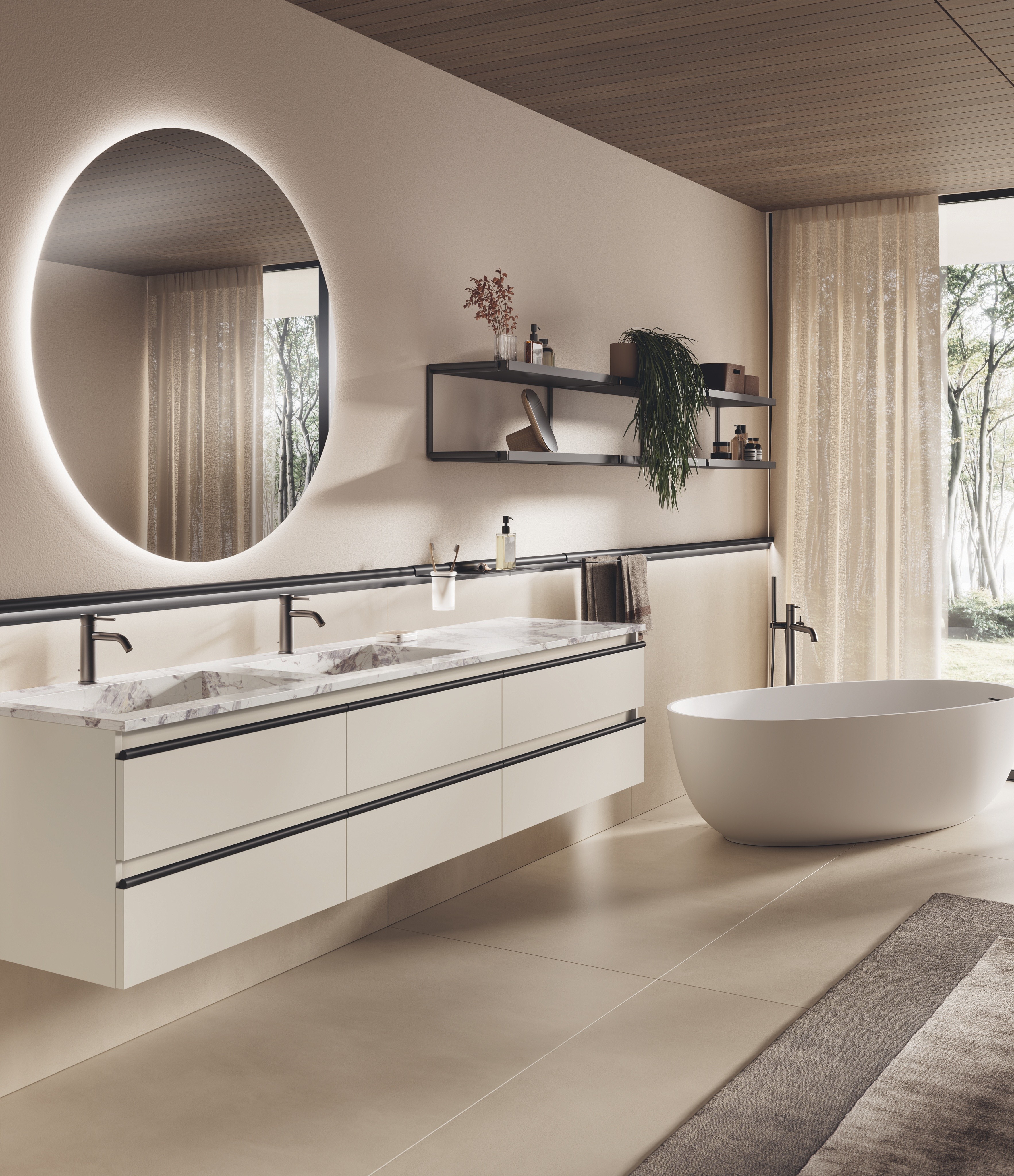
- Overall dimensions: do not stop at the cabinet body. Measure the total width, depth and height of the floor-standing cabinet, taking into account top thickness and washbasin size.
- Clearance from other elements: ensure smooth, unobstructed pathways toward the shower enclosure, bathtub and sanitary ware. Squeezing past fixtures sideways, especially first thing in the morning, is never ideal.
- Door and drawer opening: allow sufficient clearance for extra deep drawers to extend fully or cabinet doors to swing wide open without hitting walls or sanitary ware.
- Potential obstacles: check for skirting board protrusion, radiator depth, door aperture angle, and walls that may be at non-right angles.
The ideal cabinet is not one that fits down to the exact millimetre, but one that can be used comfortably and effortlessly without obstruction.

2. Position of drain, siphon and plumbing connections
Plumbing layout leaves no room for improvisation: wall pipe positions dictate both washbasin choice and internal cabinet arrangement.
- Drain height: wall outlets must align precisely with the height specifications of the chosen cabinet and washbasin.
- Siphon size: measure how much space the siphon subtracts from top drawers or internal shelving; consider a space-saving model early on to maximise usable storage.
- Hot and cold water connections: supply pipes must fit cleanly inside dedicated service voids without interfering with wall panels or drawers.
- Flexible hose routing: ensure the hoses do not require ad-hoc cut-outs on shaped drawer bottoms or shelves.
- Adapters or plumbing adjustments: planning minor pipework alterations prior to installation prevents costly masonry work later.

Materials, feet and plinth: what to assess for a durable floor-standing cabinet
Do you consider all floor-standing bathroom cabinet materials to be the same? Do you have a preference as to how they sit on the floor?
3. Materials and moisture resistance
Between hot showers, steam and splashes onto the vanity top, the bathroom is one of the home's most demanding environments. A beautiful finish alone is not enough; build quality makes all the difference. Here’s what to take into consideration.
- Surfaces and finishes: lacquered, laminates or wood-effect finishes react differently to moisture; verify they are specifically treated for high-humidity environments.
- Water-resistant does not mean waterproof: no material withstands prolonged standing water or unaddressed leaks indefinitely.
- Edging and joints: these critical points carry the highest risk of moisture ingress and must be meticulously finished and sealed.
- The surface in contact with the floor: if the cabinet rests directly on the floor, the base or feet should be insulated to prevent swelling from trapped water.
- Ease of maintenance: non-porous surfaces are generally more hygienic and tolerate daily household cleaning agents better.
4. Feet, plinths and stability
How a cabinet meets the floor defines its style and directly affects ease of cleaning. The main solutions to choose from include:
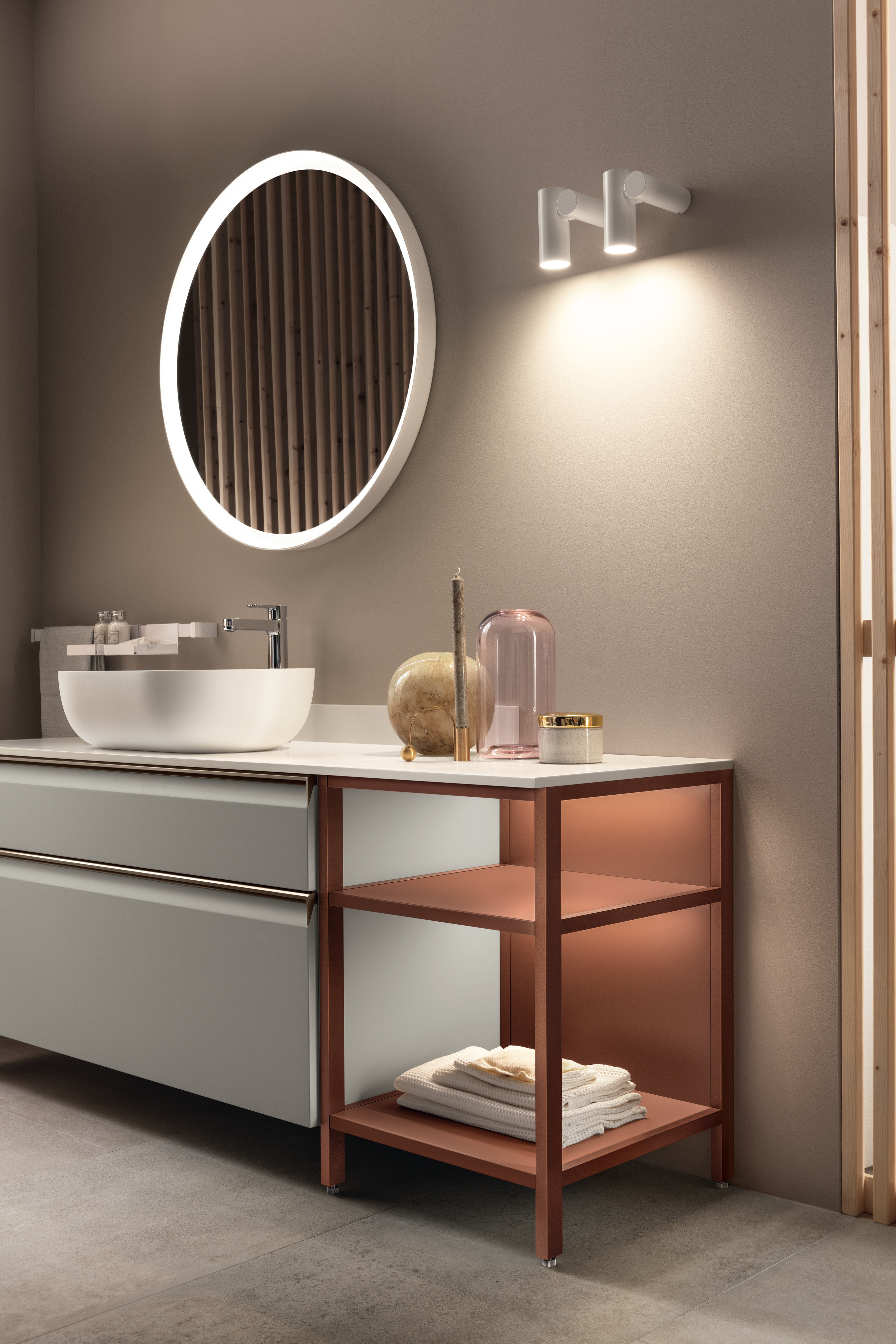
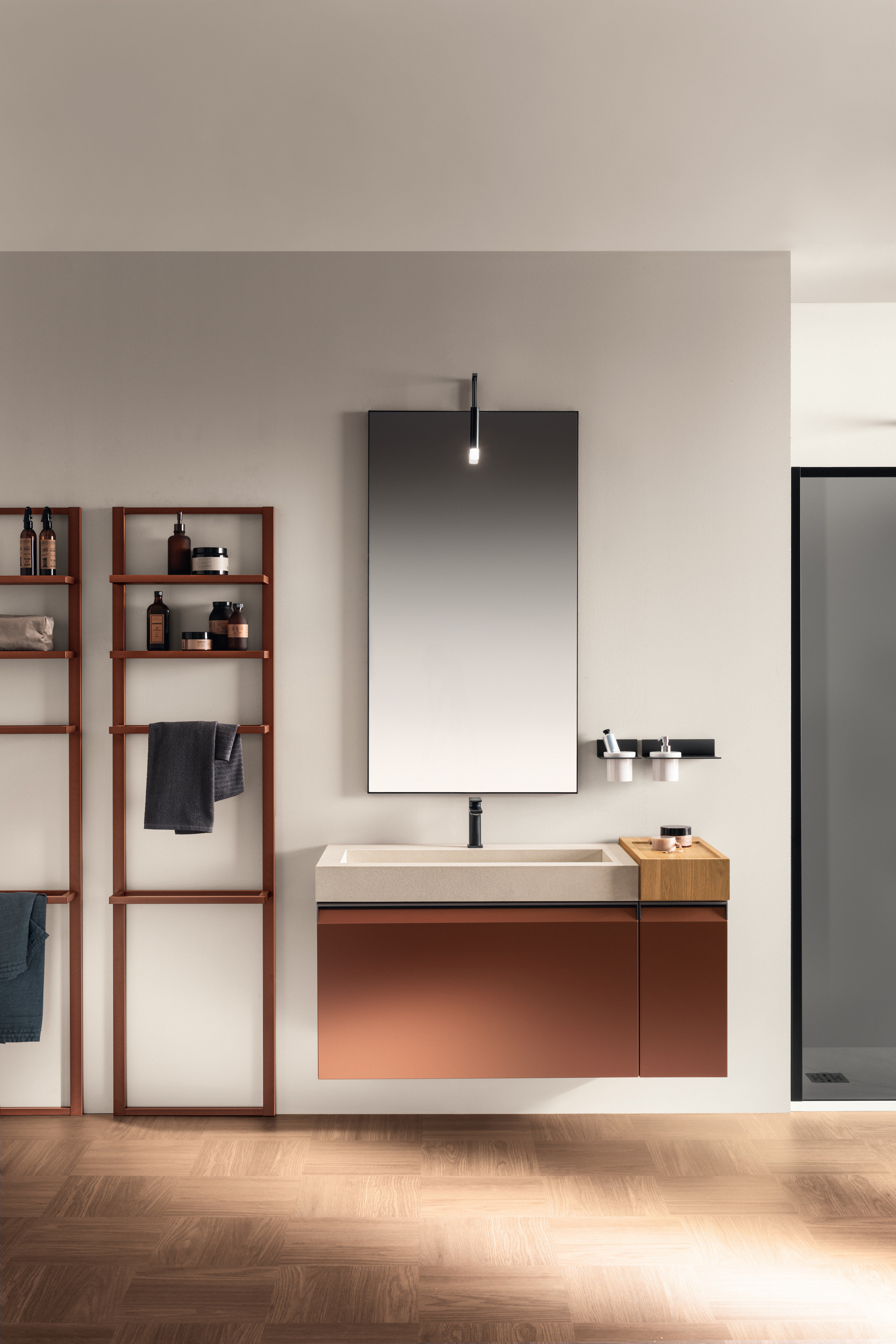
- visible feet lend visual lightness and, with adequate ground clearance, allow brooms and floor mops to pass under smoothly;
- continuous plinths provide a compact, monolithic footprint that conceals the under-cabinet void; careful installation is essential to prevent dust and water from creeping underneath.

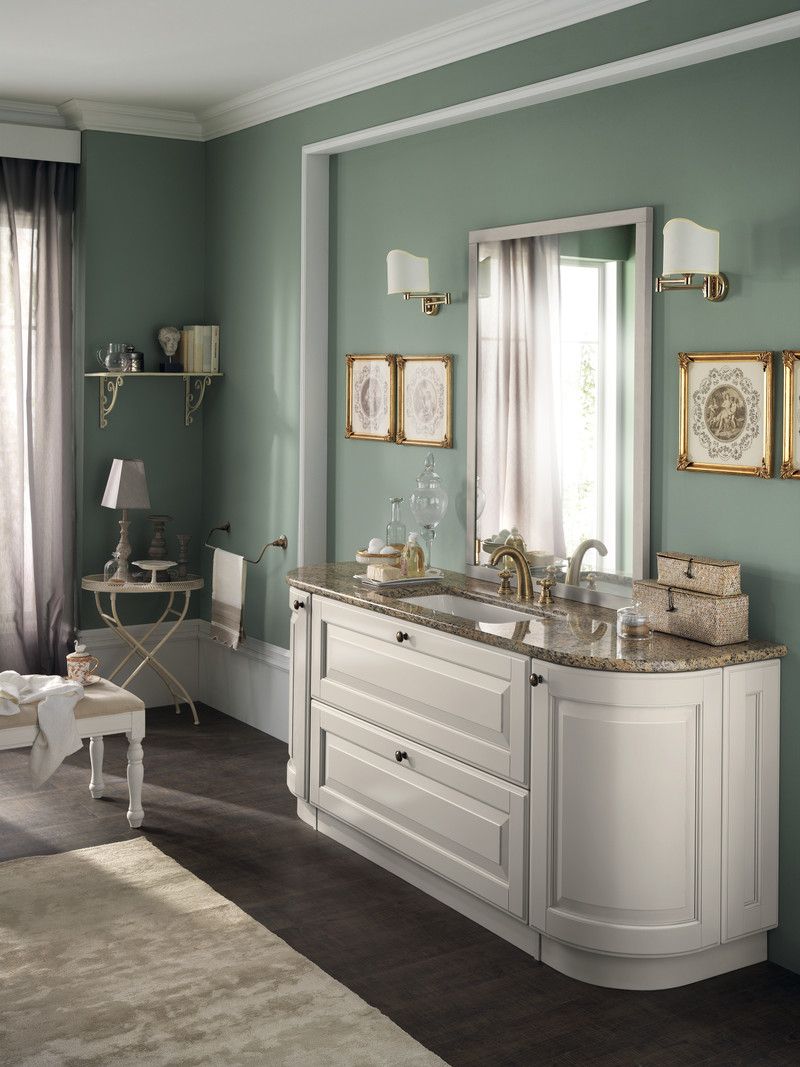
Designer’s tip: even though the vanity cabinet is floor-standing, securing it to the wall remains mandatory. To prevent tipping, especially when full drawers are fully extended, always use the manufacturer’s wall-anchoring kits.
Storage, washbasin and everyday use of your cabinet
How do you usually use your bathroom? Do you share it with others? Are you an avid collector of creams and perfumes? Answering these questions could help you pinpoint the right floor-standing bathroom cabinet for you.
Storage spaces built for daily routines
When evaluating a bathroom cabinet, the storage space should never be overlooked.
- Full-extraction drawers: the best choice for keeping cosmetics and daily accessories immediately accessible while optimising space around the siphon cut-out.
- Spacious compartments and doors: ideal for stowing bulky backup supplies, cleaning products and guest towel sets.
- Open-fronted compartments: add rhythm to the composition through an interplay of blocks and voids, offering convenient access for frequently used items.
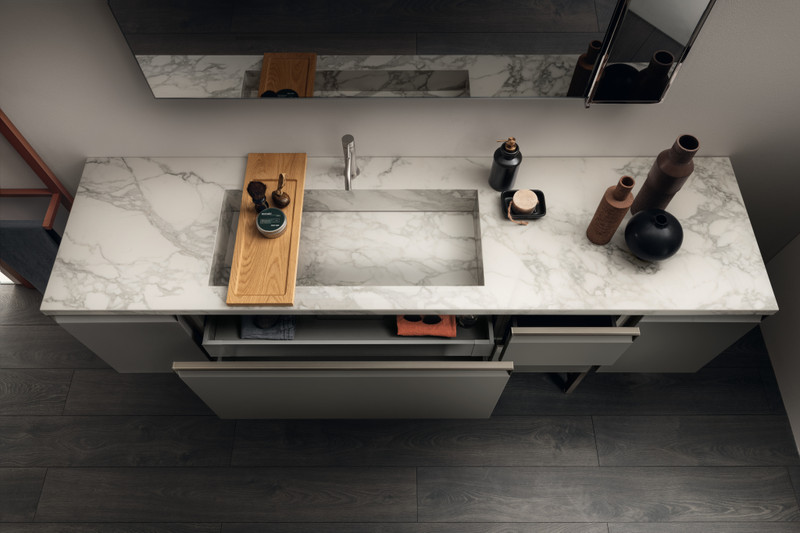

The choice of washbasin
Beyond shaping the cabinet’s overall aesthetics, washbasin selection directly influences daily comfort. The main solutions differ in type and size.
- Sit-on washbasins: striking visually, these require precise height planning. The total height of cabinet, vanity top, and basin edging must yield a natural posture that prevents strain on the back and arms; matching them with correctly proportioned tall-spout or wall-mounted mixers is critical.
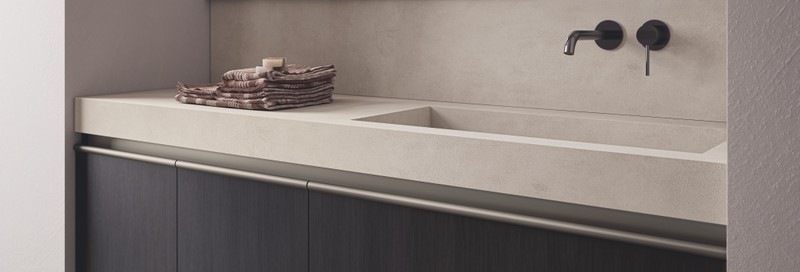
- Washbasin built into the vanity top: form a continuous, seamless surface without joins. It is ideal for minimal architectural schemes requiring effortless cleaning.
- Inset or semi-inset washbasin: the ideal compromise that delivers a deep, generous basin bowl while preserving ample surrounding vanity top space.

Have you made a note of it all? Planning measurements, pipework alignment, material specifications, base options and storage configurations in sequence guarantees a floor-standing bathroom cabinet that is functional, durable and a pleasure to use every day.